Interviews

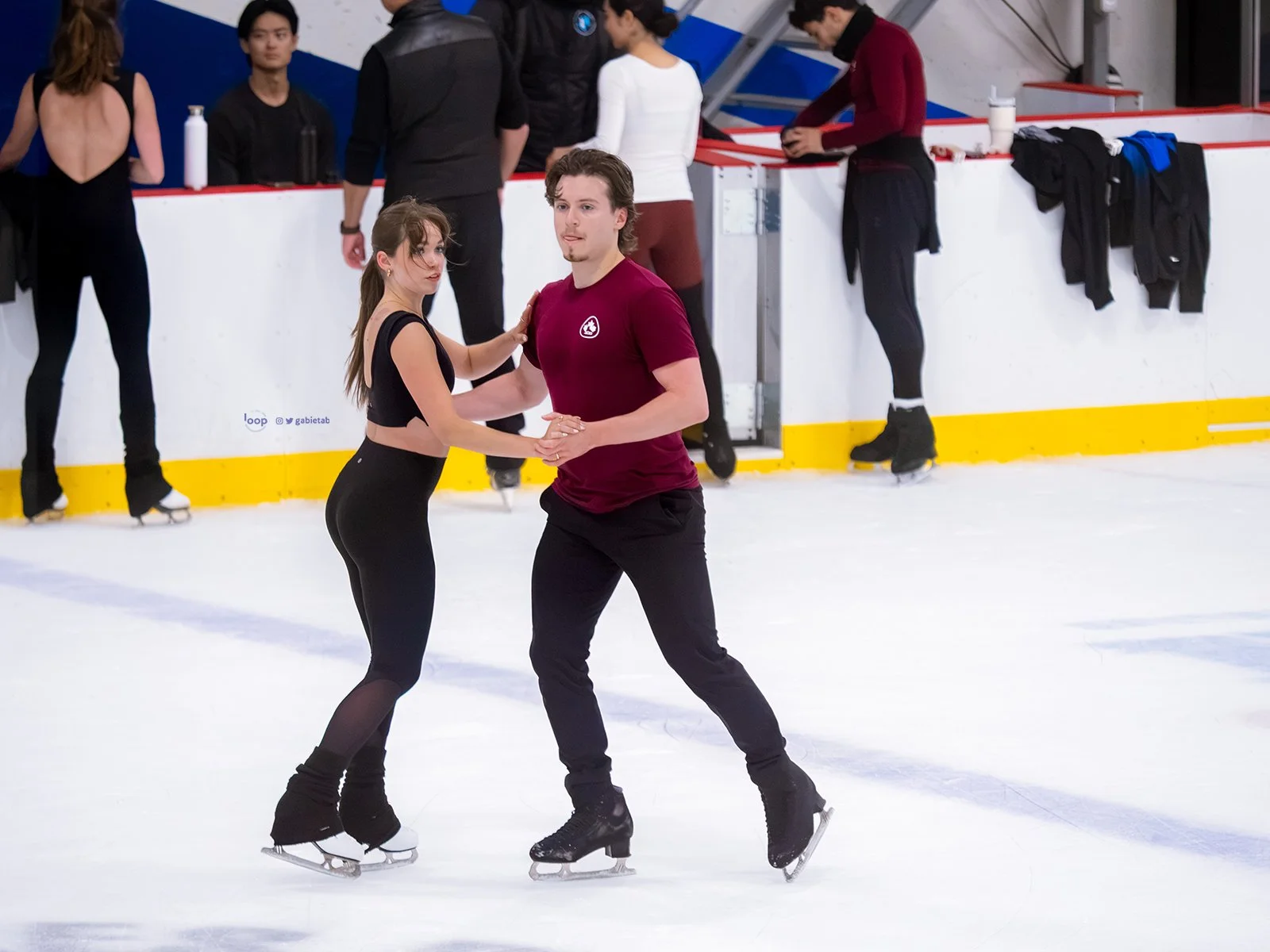
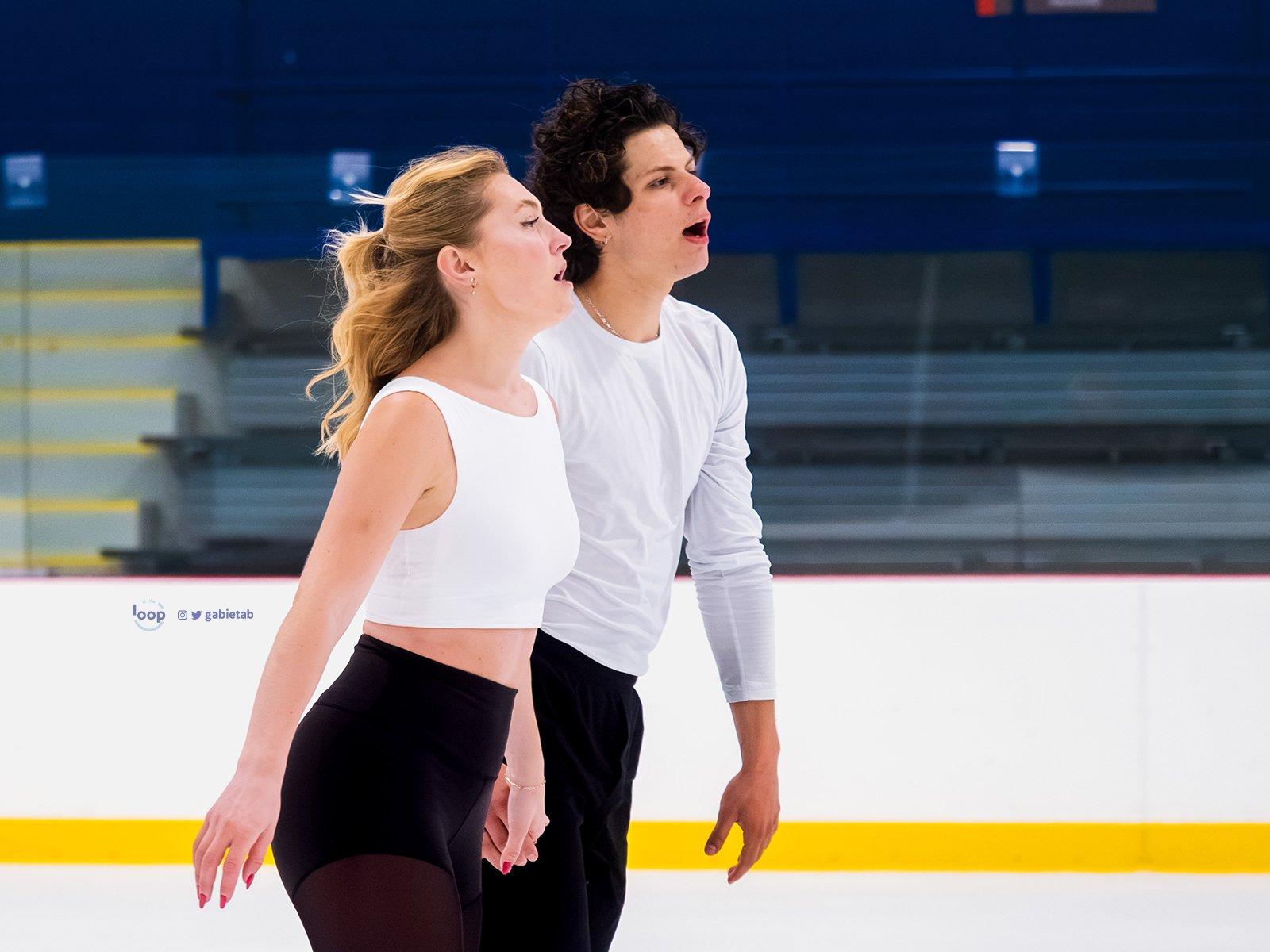
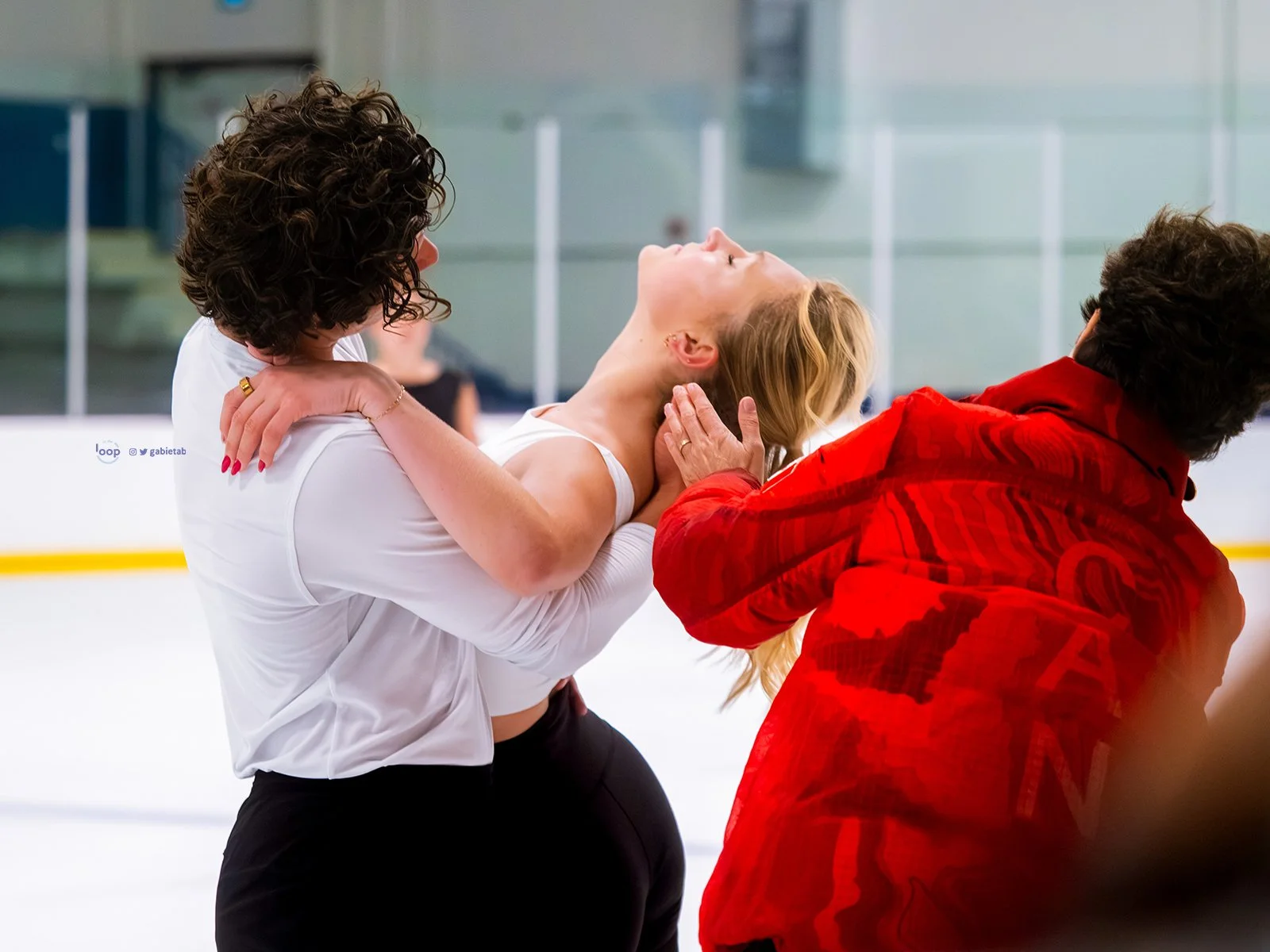
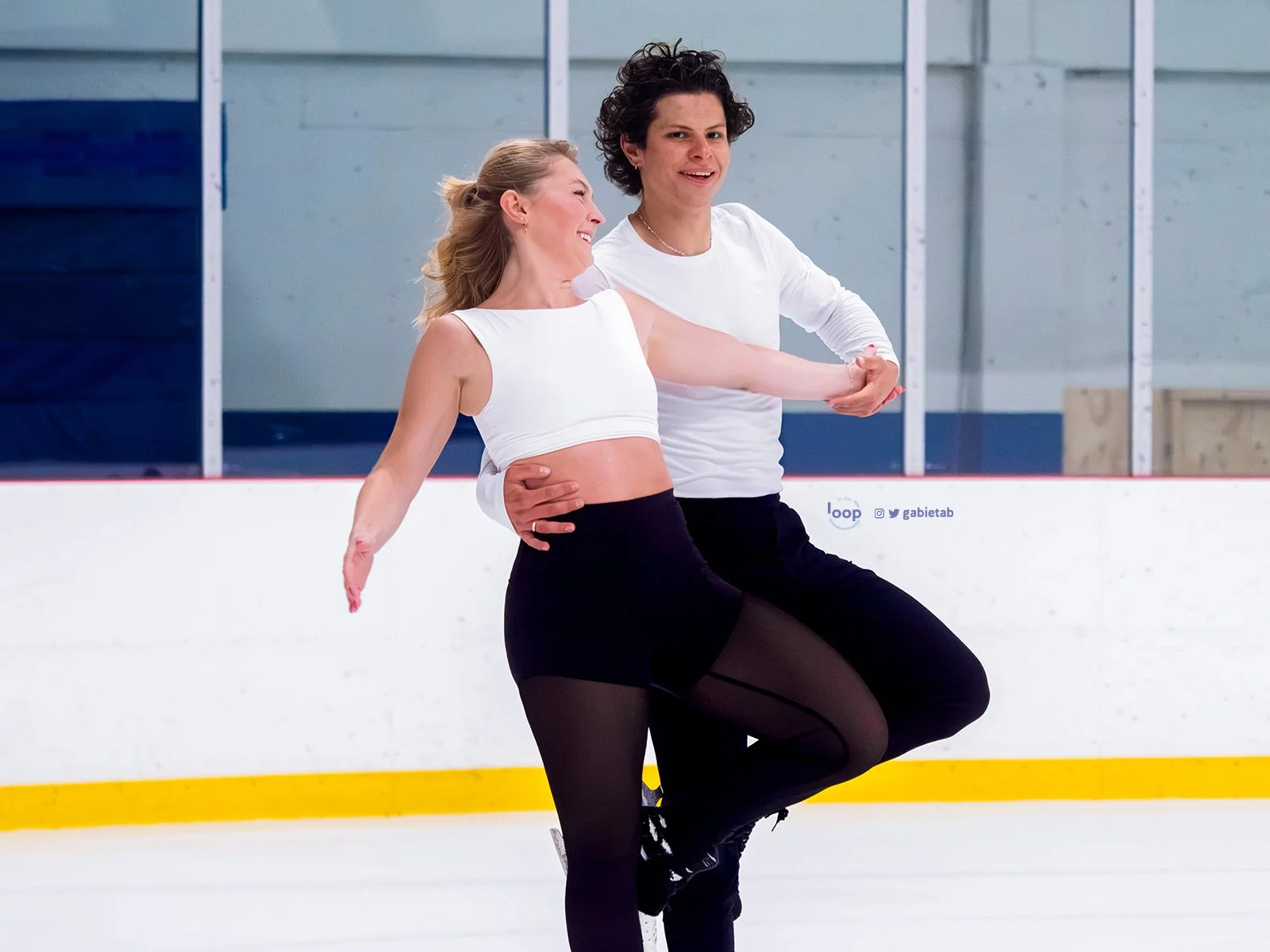
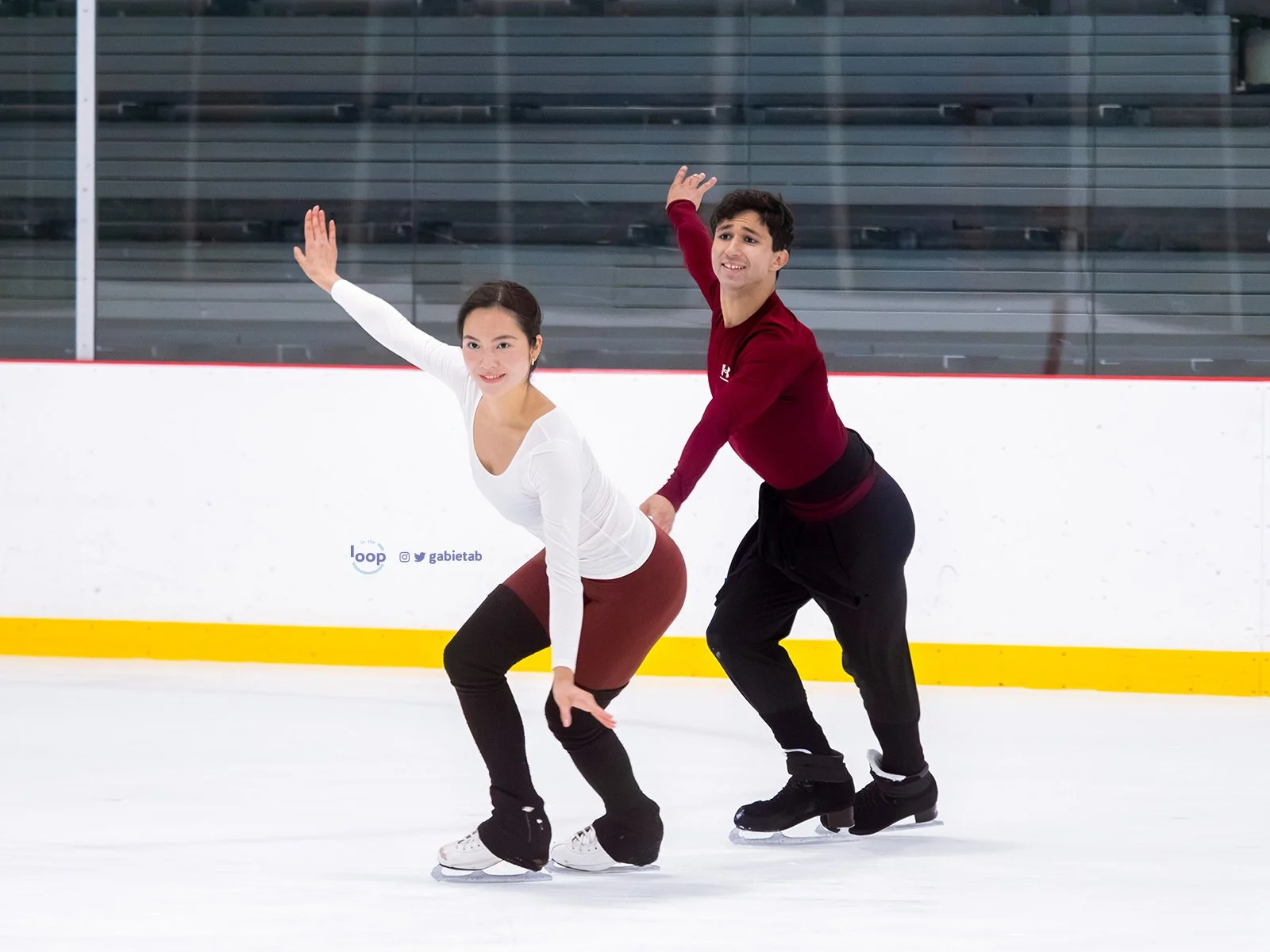
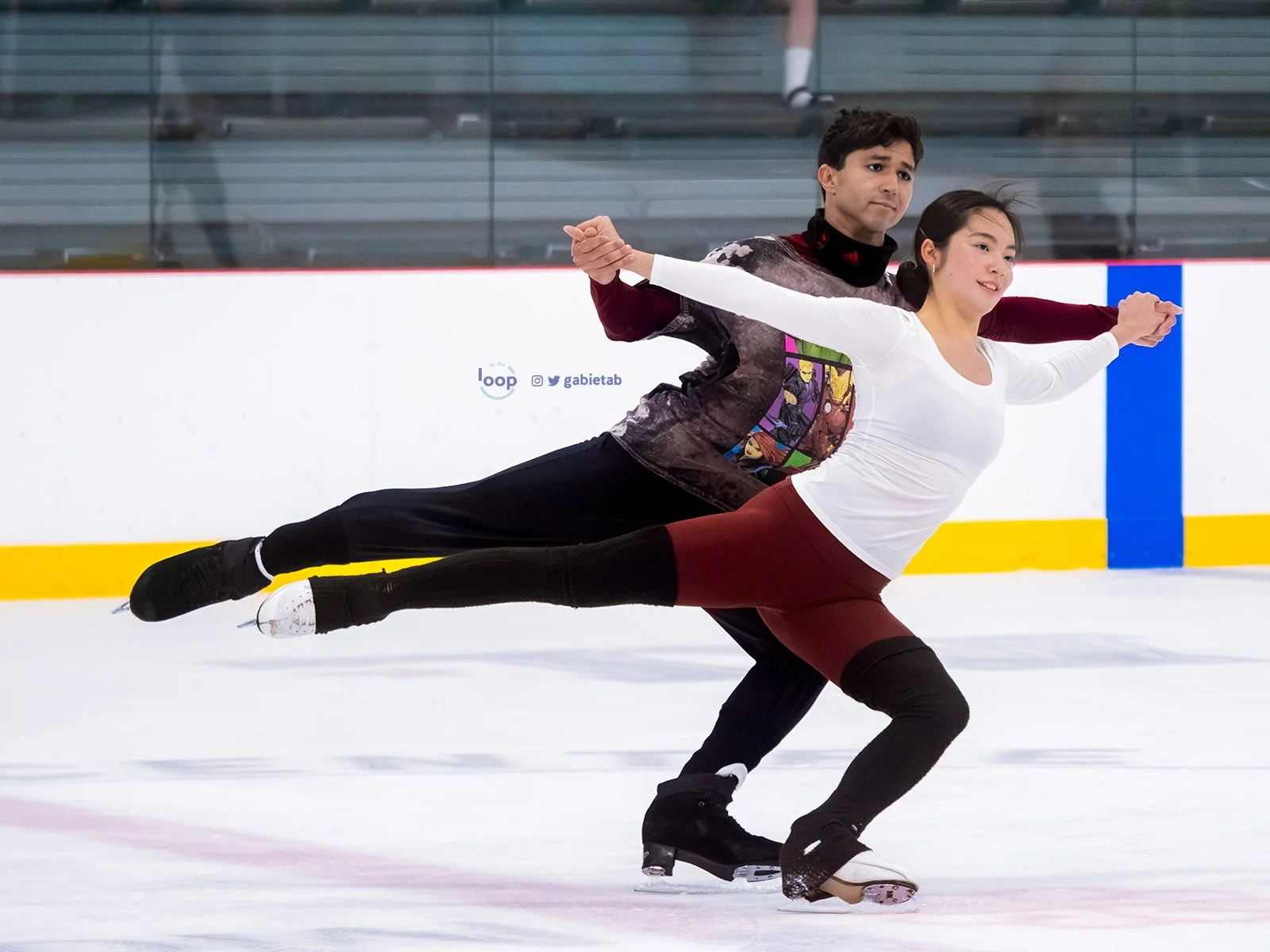
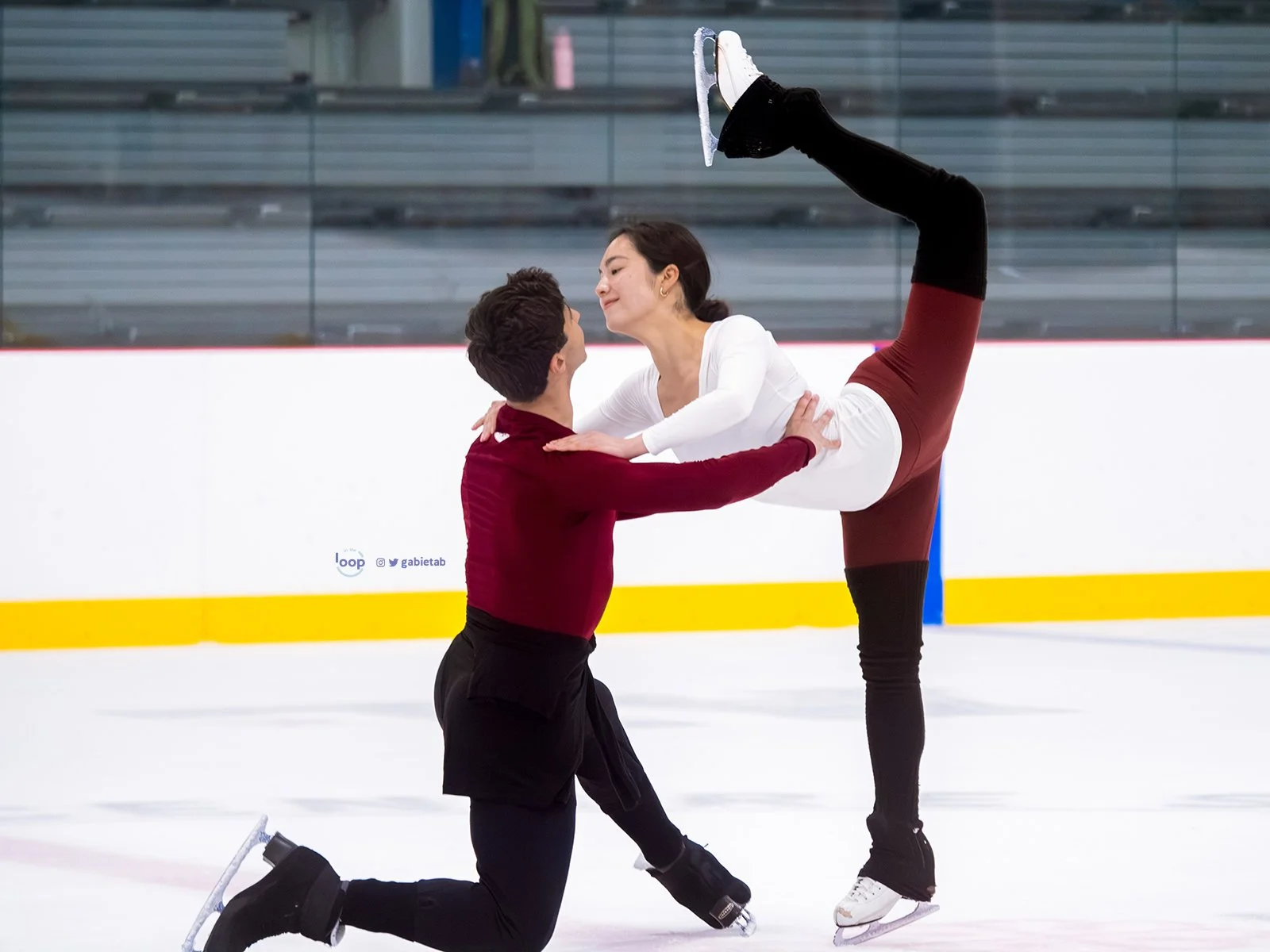
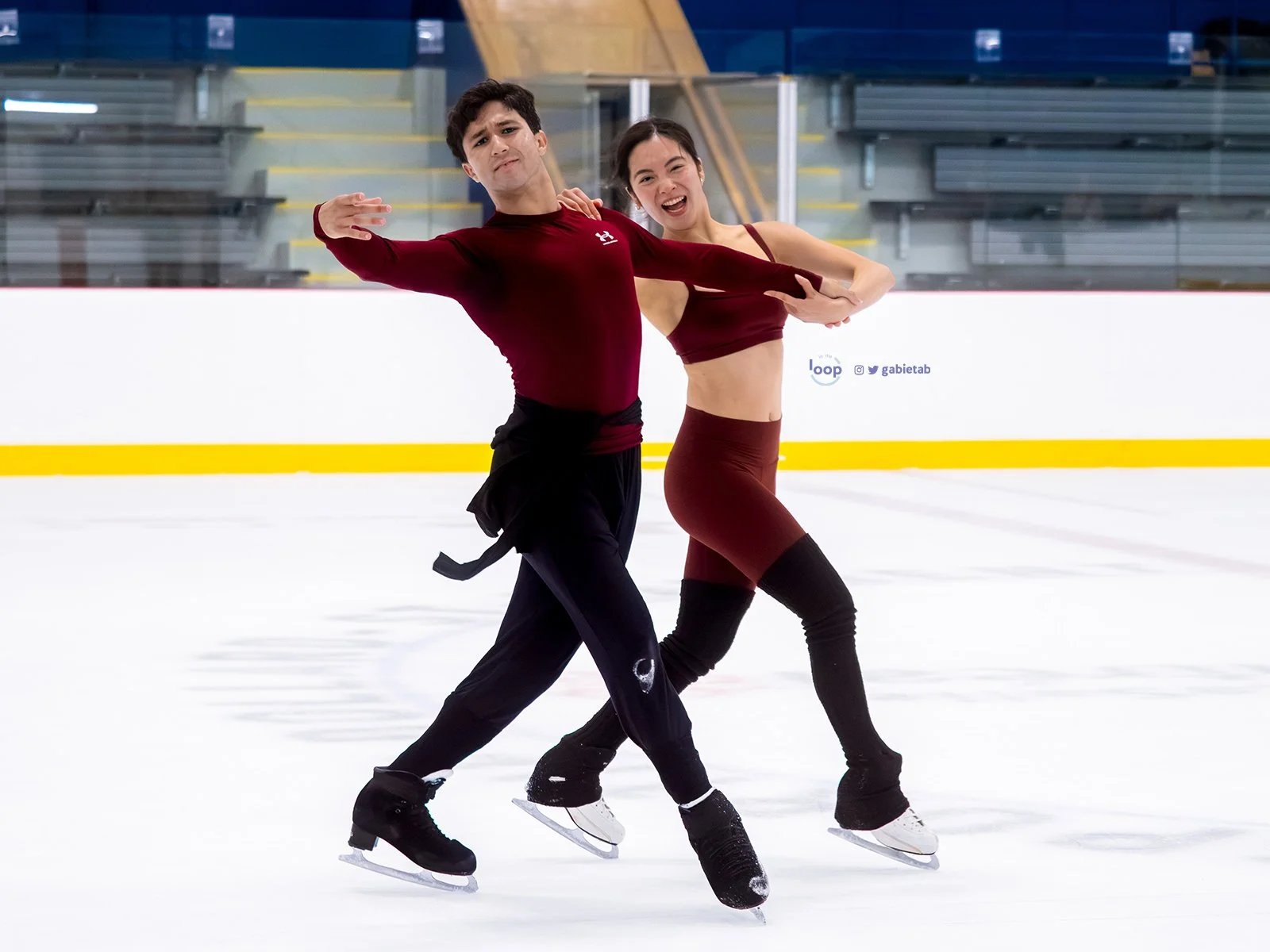
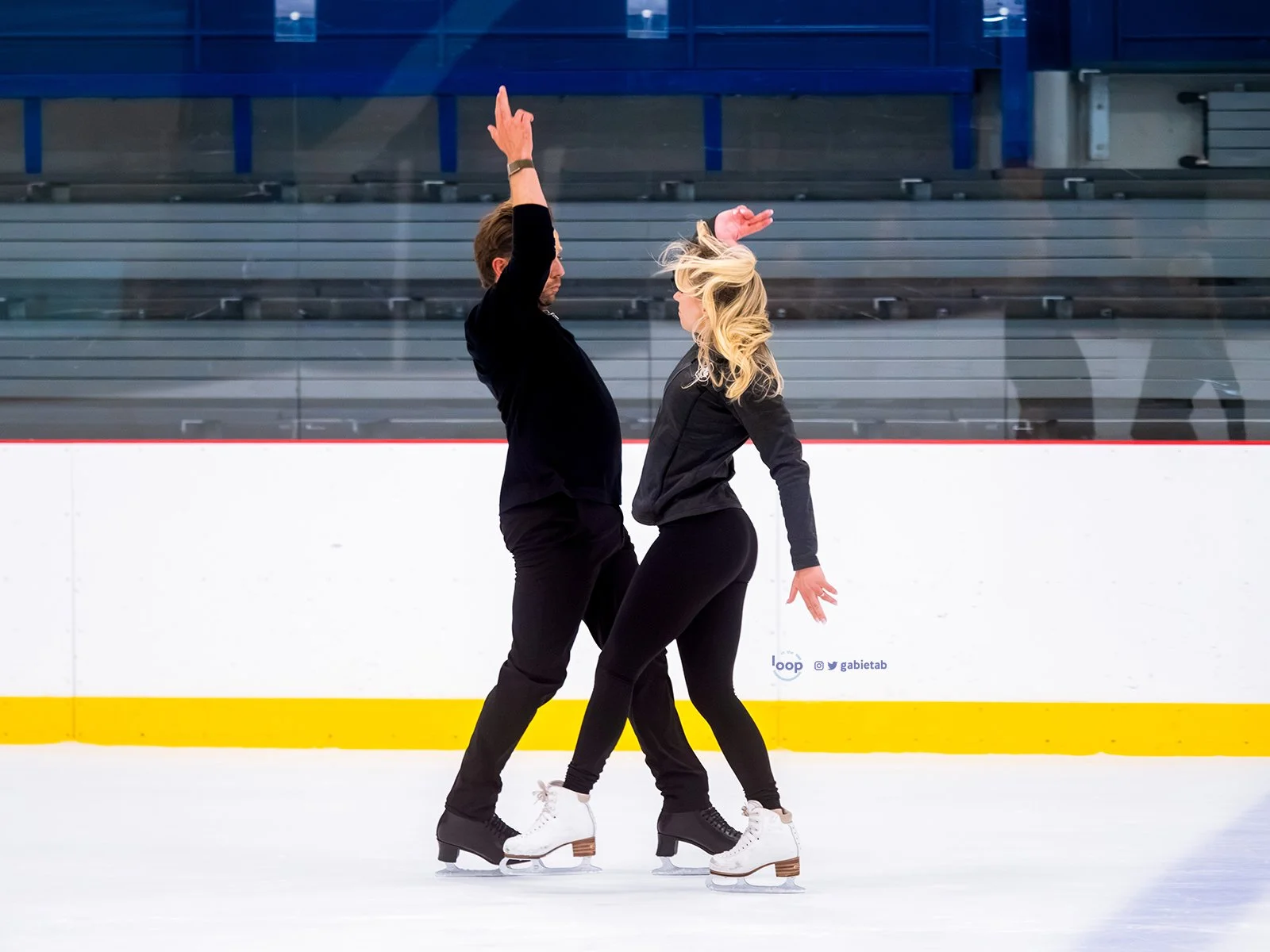
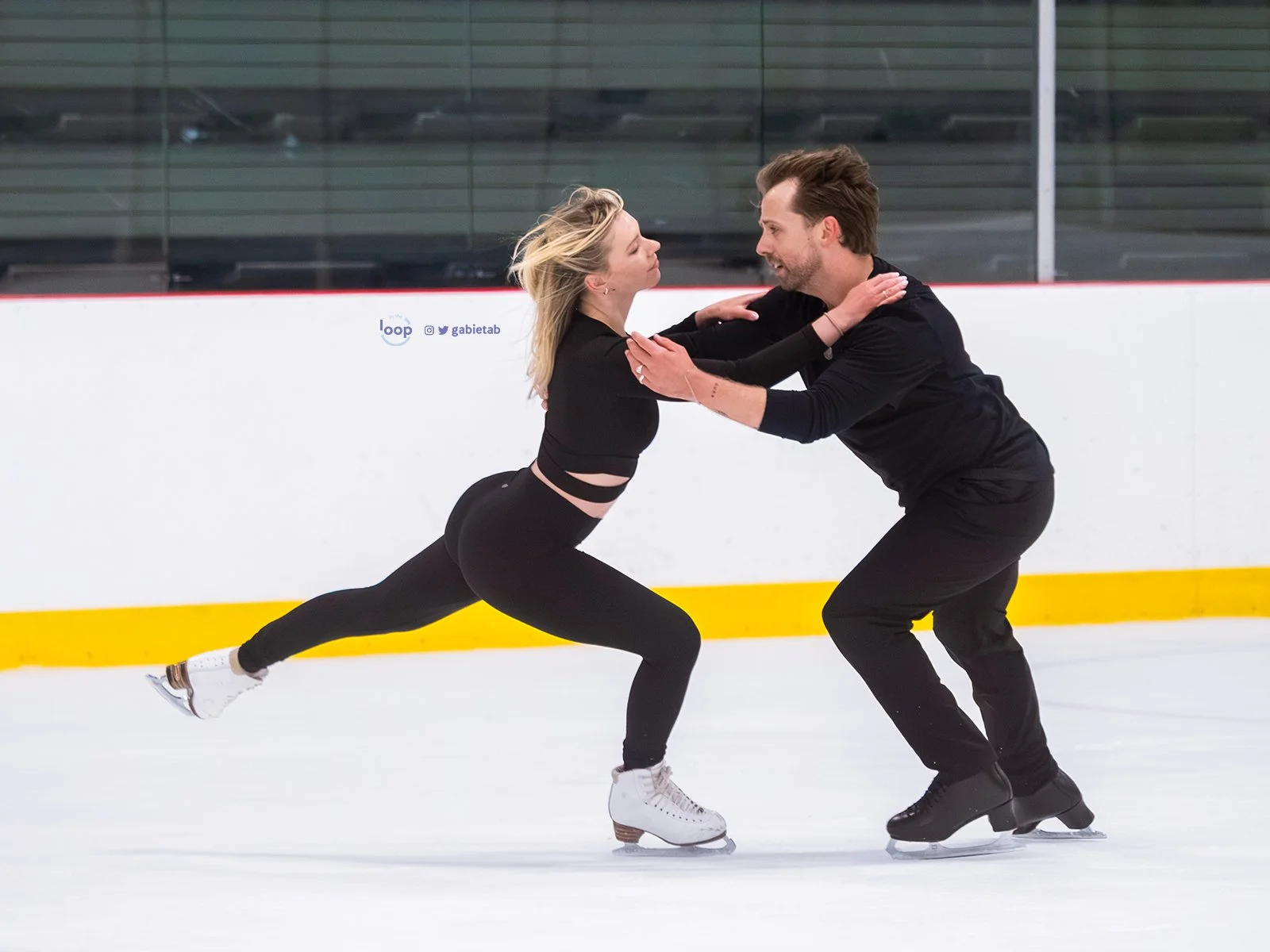
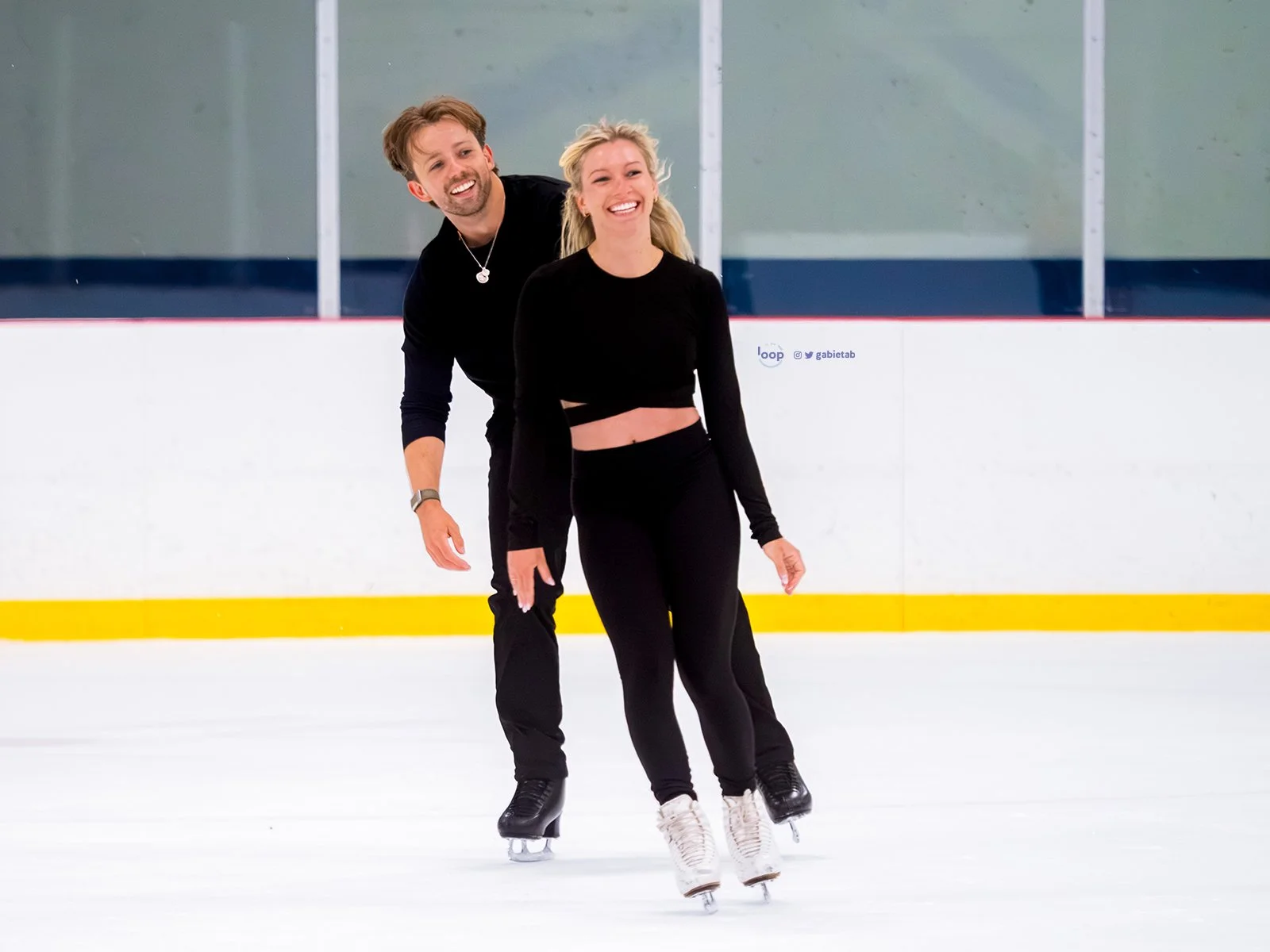
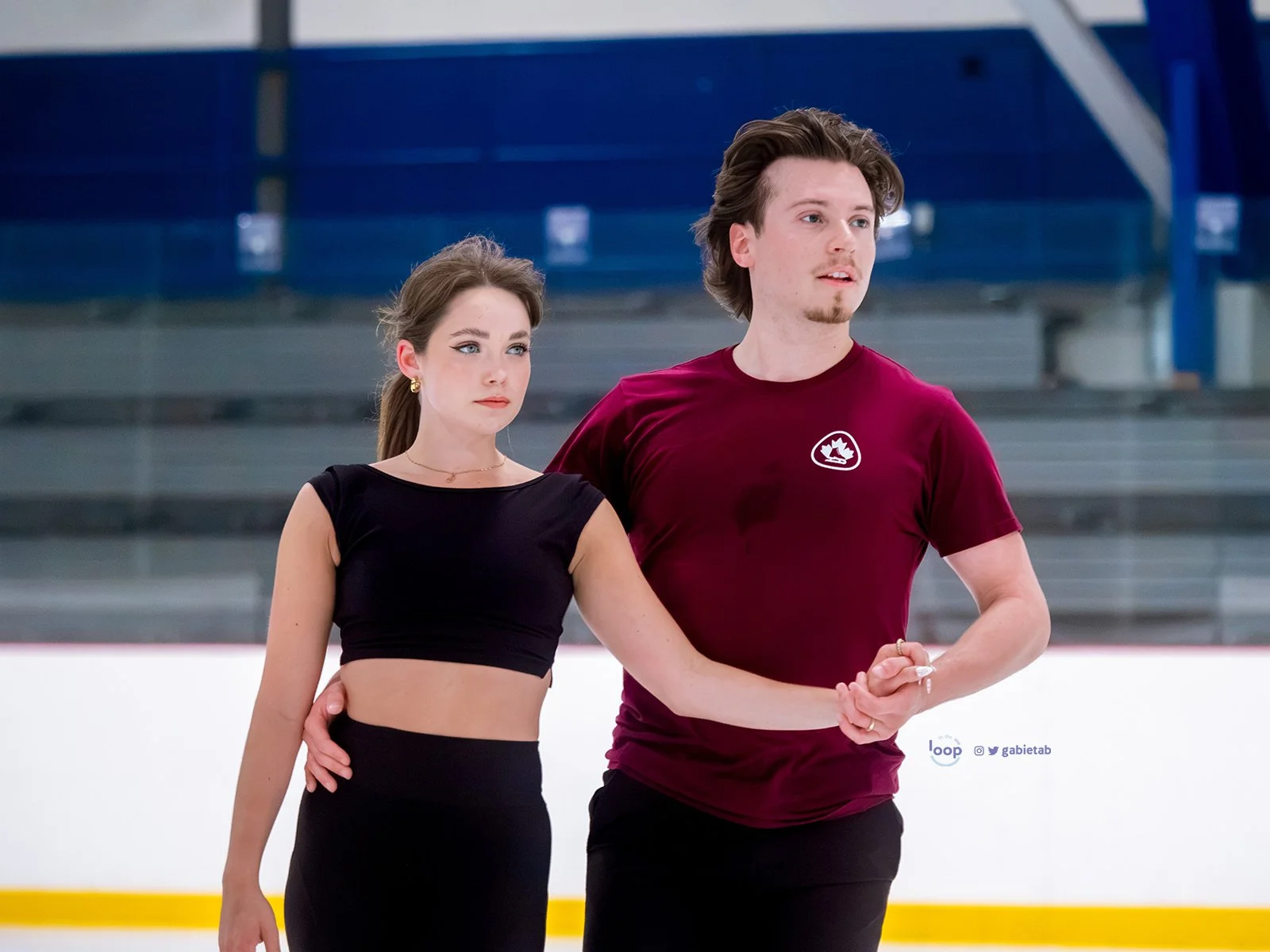
Spotlight On: Sandrine Gauthier and Paul Ayer

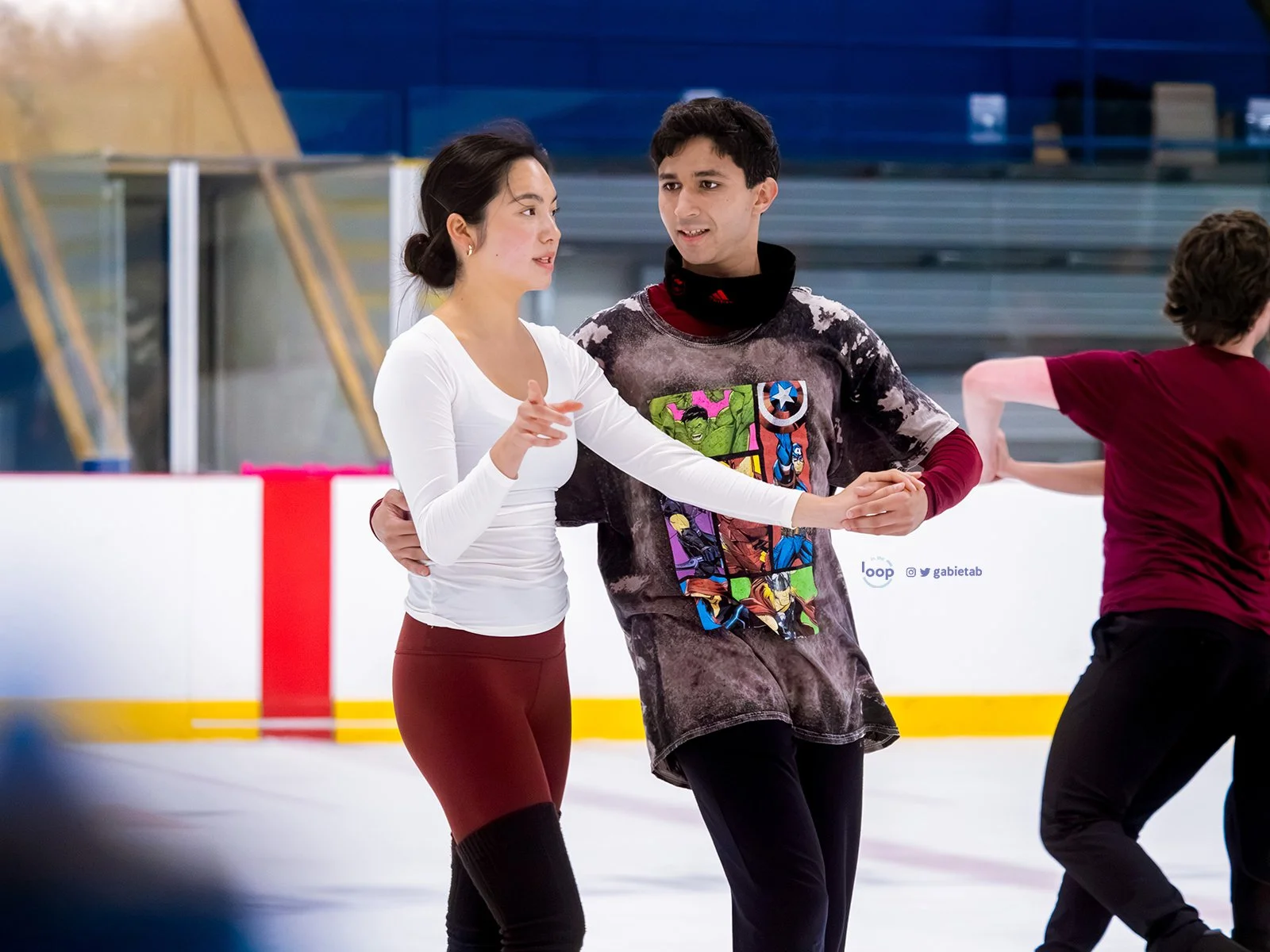
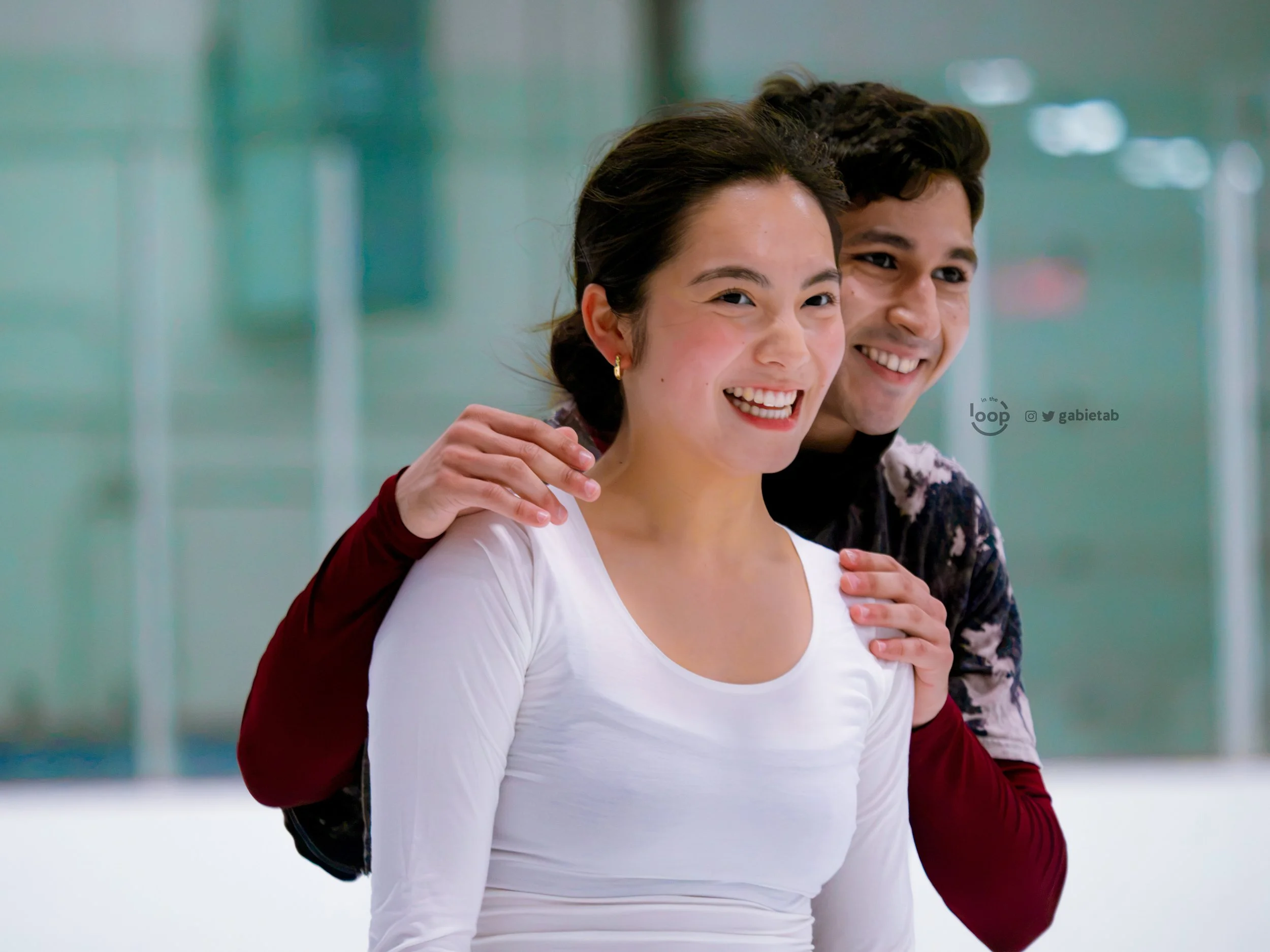
How did you guys partner up?

Sadrine: I stopped skating with my previous partner a couple months ago, and we decided to partways and that’s when I started being on the market. Paul was also single and that’s how it started.

Paul: From my side, I was training right up until the World Championships with my previous partner just in case we got the call to go. So it was a later start for me for the partner searching but once that happened, we hit the ground running. We did try out during my second week of being partnerless. Then we both had several tryouts with different people from around the world. We had different options. Not only were our feelings from our separate sides that we felt really natural with each other, but we also took the advice of the coaches from both of our separate sides again, like who we looked better with. As much as it can feel amazing with somebody, at the end of the day, it is a judge sport. Whoever's going to look the best externally will likely get you the higher points, which will get you the results that you're wanting and the reach the objectives that you're looking for. The fact that from both of our sides, the coaches agreed with us feeling super natural together, it was just like why not just choose right now because everybody's on the same page.

Training

Paul: Three weeks in, and we're still having a blast. We’re still running out of time on the ice every single session which makes things really easy to keep going.

Appreciate or admire about each other so far

Sandrine: I like his energy and that he is always present. He always wants to reach his objectives on the ice during the day or for the week or the month. I’m really glad he is like that and he helps me to make myself better as a person and athlete.

Paul: Sandy's side, for me, she is one of the kindest people I know and it's something that I admire about her. It makes me want to be a better person. Also just the fact that I have no worries about working hard. If something's not working on the first attempt or 10th attempt, there's absolutely no stress on just doing it again. 100 more times and to just get those reps which is what it takes at this level. To make those little tweaks and to get the things done that we want to get done.
Seniors for Sandrine

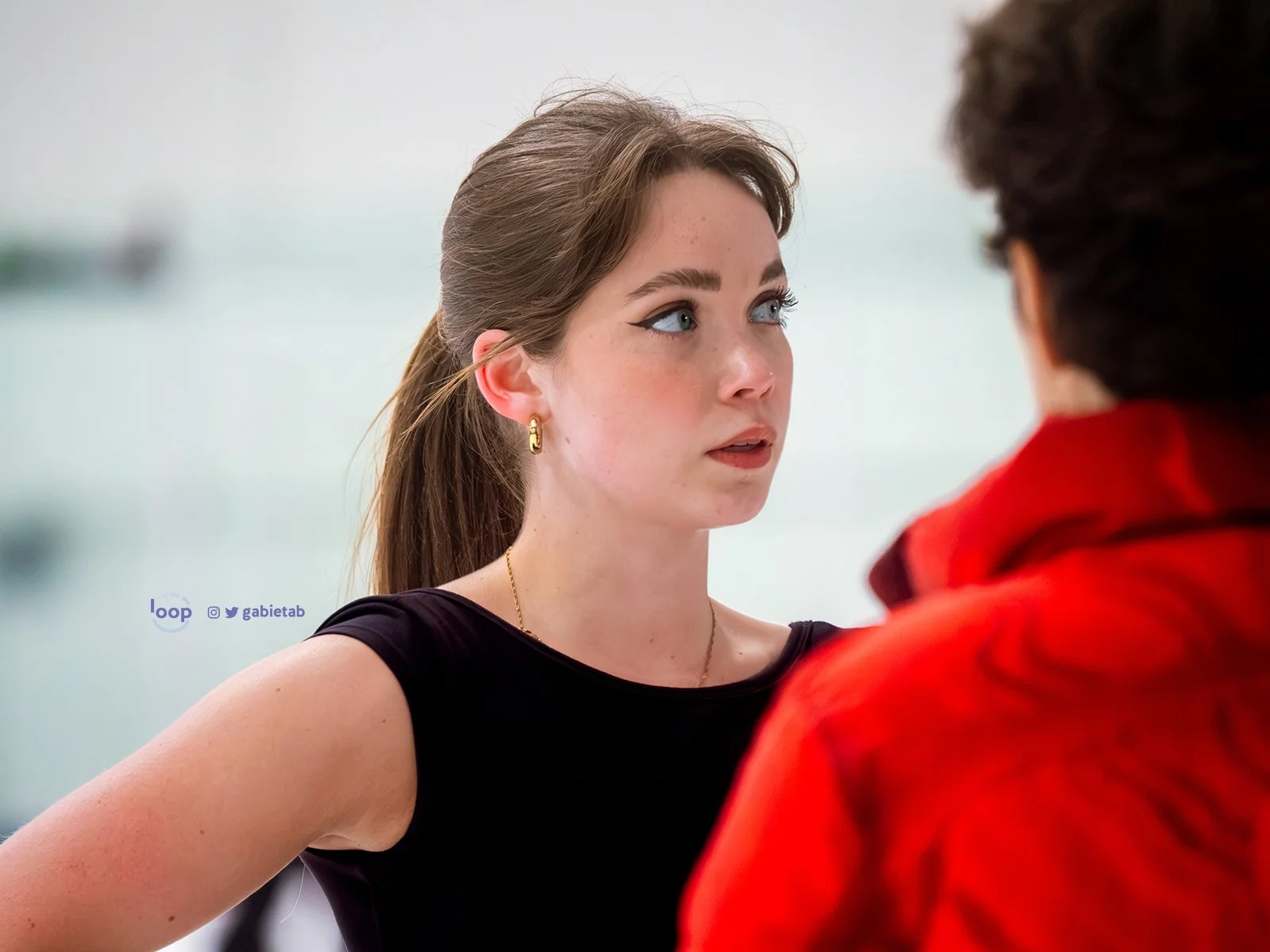
Sandrine: I just trust the process. It's kind of a long process being in senior and to mature from juniors. I think having the opportunity to have Paul, who has a lot of experience in seniors, will for sure help me. I'm just continuing one day at a time.

The Golden Waltz

Paul: Honestly, awesome. We love pattern dances.

Sandrine: I was really happy to do pattern dances. I've been doing pattern dancing since pre-novice when I was younger with my old partner. When the ISU said that we're doing golden waltz, I was like, oh my god, I'm so excited for it! We're working so well together that it's fun to try new things.

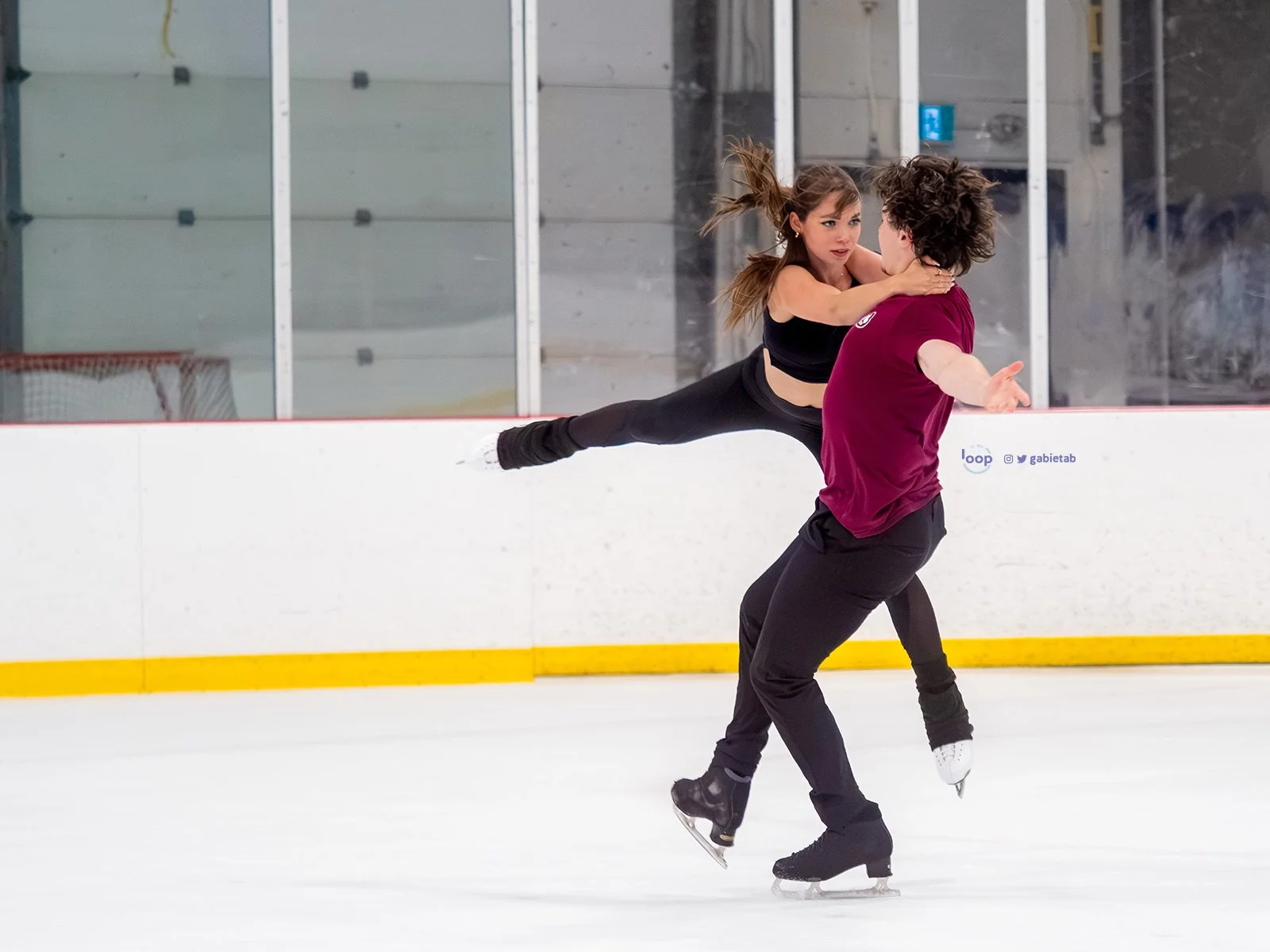
Paul: To have done pattern dances like she said when we were both younger has really made a difference. Hopefully this season, you'll be able to tell who has had that experience on being able to do patterns together. But in our case, Sandy's actually a lefty, so it works out perfectly for the golden waltz because the twizzle is on the left back outside, which is quite tough, especially with the timing. Because of that, we're aiming to do this unreal move, where my leg passes over her right after her twizzle, and she's doing a back bend… Anyways, stay tuned for that! If we can manage to get that done with the time restraints of the golden waltz, it will be the only team in the world that could do that. So we're really aiming to get that done.
Programs

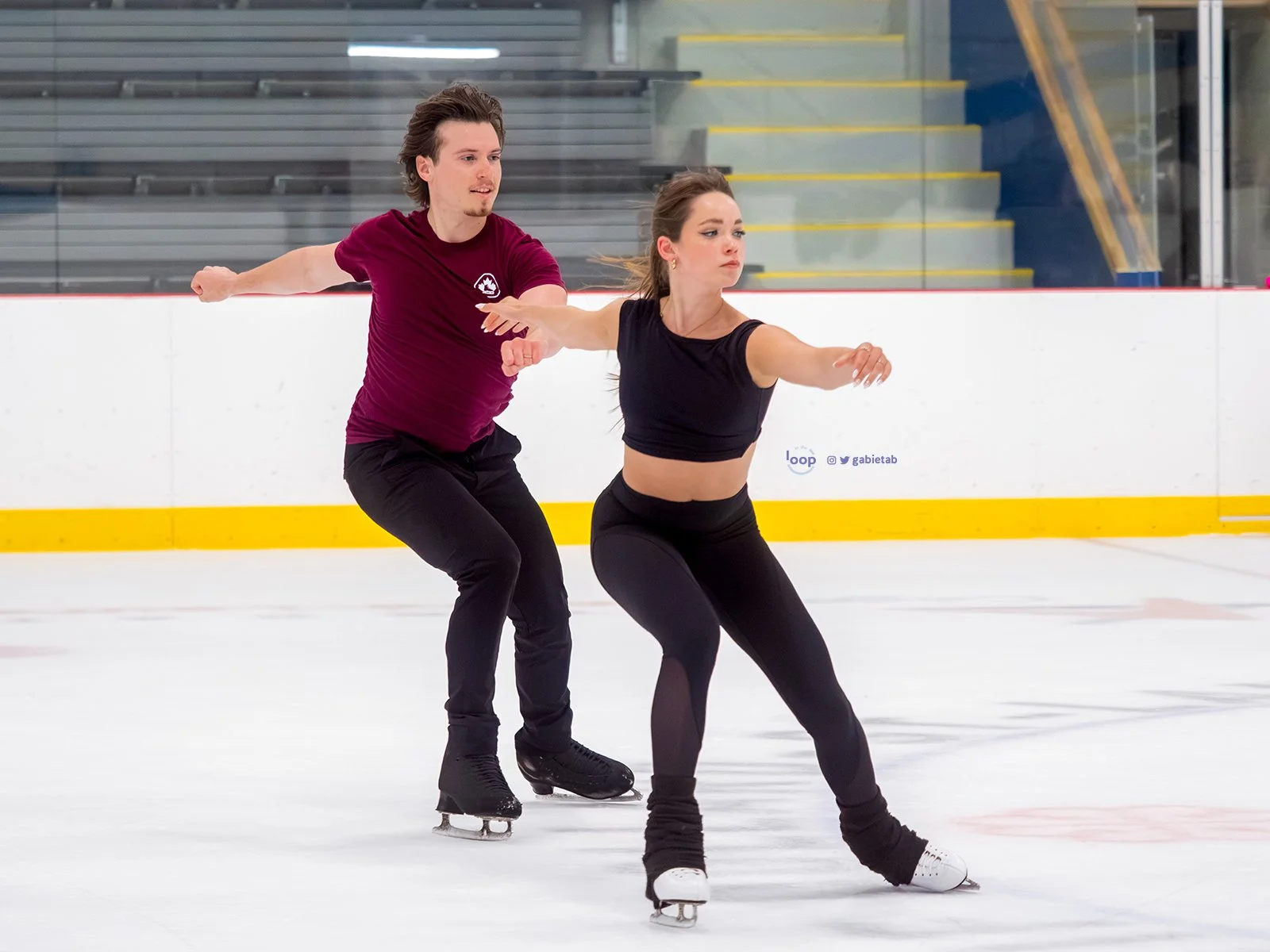
Sandrine: We're doing Queen. We're doing a really energetic program.

Paul: Starting with We Will Rock You. Hopefully it will get the crowd going right from the start with the stomping and the clapping. I can't wait to hear the crowd going off after that.

Sandrine: It's a style that we've done before with our old partners, and we really liked it, so we decided to go with that.

Paul: To be able to do the Golden Waltz to a song that is good and that many people enjoy is awesome. Looking at other musical options, there were great songs, but for the golden waltz restraints, it was just about choosing something that works. The fact that we were able to find something like Queen with a strong golden waltz… It is going to be a highlight of our rhythm dance. For the free, we're doing Hunger Games, which we're really excited for. It’s a different style for me that I have not done in recent years. I'm really excited because, not only can we work on portraying the connection that we have, but the acrobatic side of things that our skating will bring is exciting for both of us.
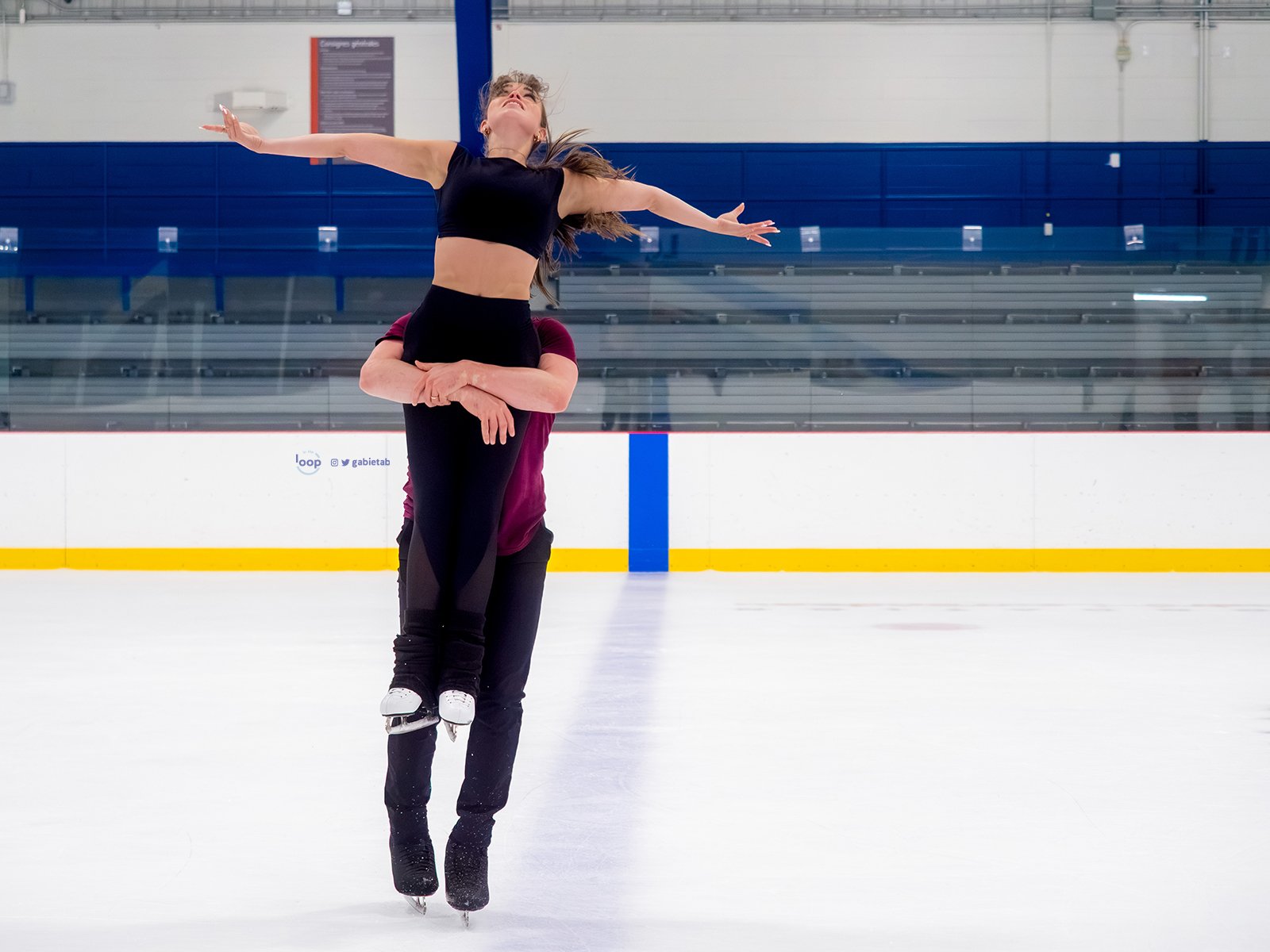
Possibility of representing Mexico?

Paul: I was not expecting to have citizenship. Obviously, that's what it takes to represent another country. But I've always been extremely proud to be Canadian and being born Canadian. It's always been my dream to go to the Olympics. Not only that, but for Canada. With figure skating being one of the most challenging sports in the world… And I love challenges. So to do one of the most challenging sports in the world with one of the top countries in the world in that sport, it means, you're not only the best because you're at the Olympics, but you are the best of the best. Which is part of the reason why I wanted to stay with Canada. They have always been so supportive of me. As much as I love Mexico and would like to go. I mean Donovan Carrillo is asking me all the time. He's like “Paul, please, please”. I’m like “Donovan, please don't do this to me…” I want to but not more than I want to represent Canada.
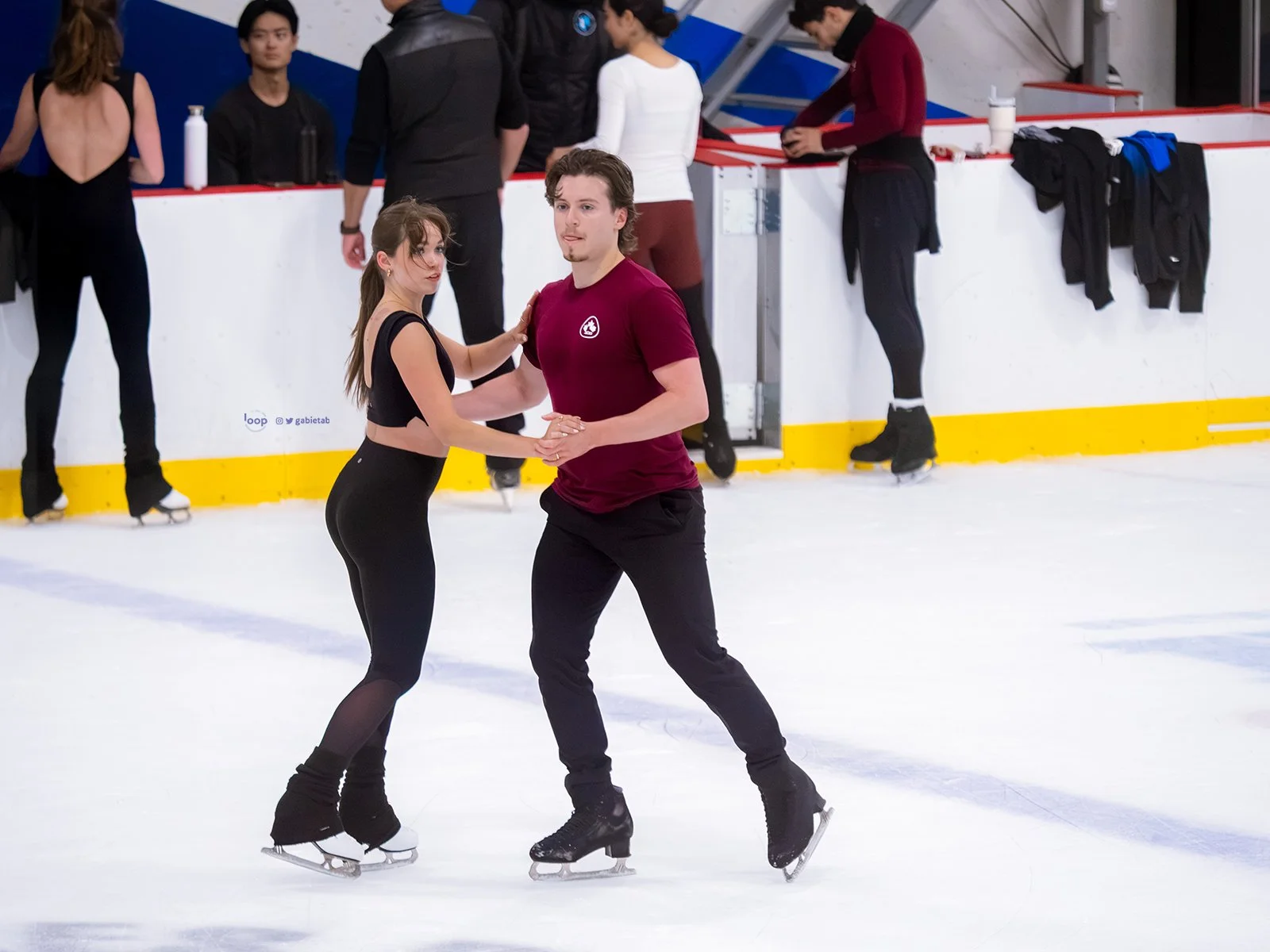
Goals

Sandrine: I would say that for the short term goals, for now, it's like to compete at the next competition [Championnats québécois d’été] which is in three weeks I think? So that's the first one. For the end of the season, I would say it's to become national champions. For the long term…

Paul: In four years we're going to be on the Olympic team.

Feelings about their first scheduled competition together

Paul: Scheduled is a good word for that! We're aiming to do both programs. We are not done with either of them. There's definitely a reason why teams take their time to build their programs and be ready for the Grand Prix seasons. The fact that we are aiming to compete in three weeks… We’re five or six weeks into the partnership at that point so it is a tall order. As far as nerves go, I don't know how you are feeling?

Sandrine: I'm pretty excited honestly! Everything is so new. For sure, there's a little bit of nerves, but I don't really feel it right now. I'm still enjoying the process.

Paul: We’re definitely focusing on the present. Like today: what can we do this session that needs to get done? And then, like I said earlier, we're running out of time on the ice for every session. So then it's like the next session, let's do what needs to get done.

Sandrine: We have a list of things to do.

Paul: We’re constantly adding to the list. Come three weeks from now, we're still going to be running out of time. Hopefully by then, the program will be more presentable.
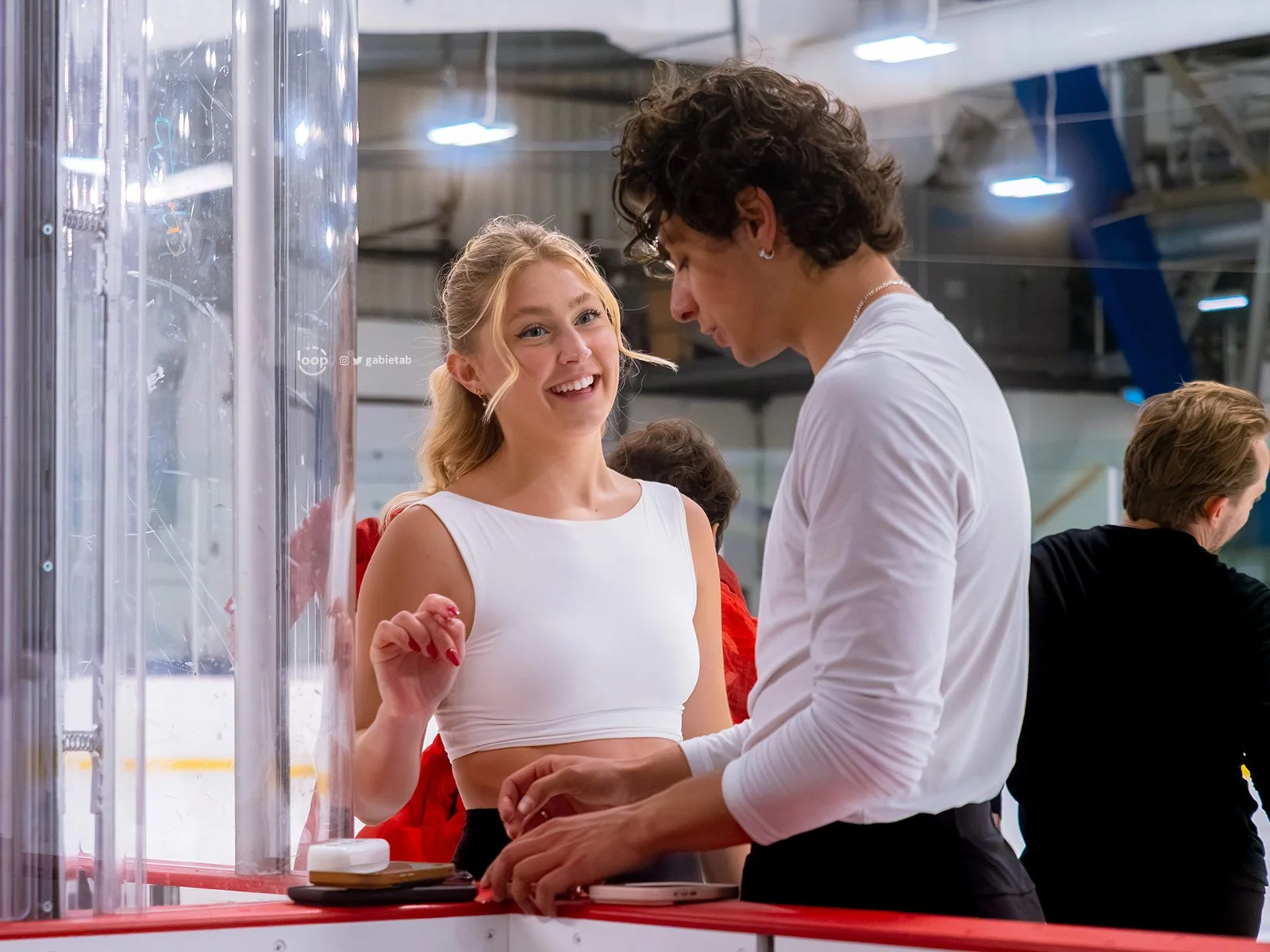
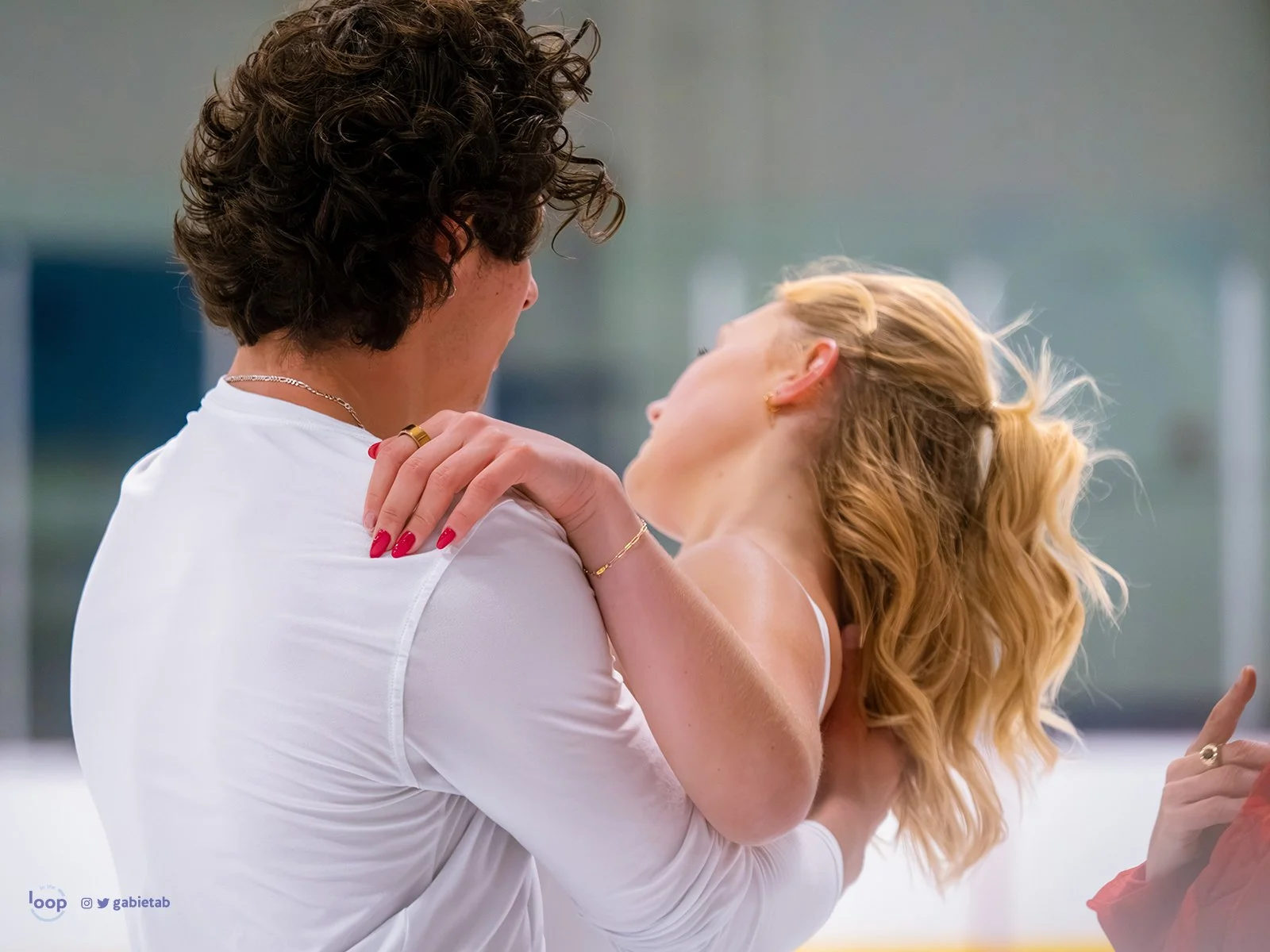
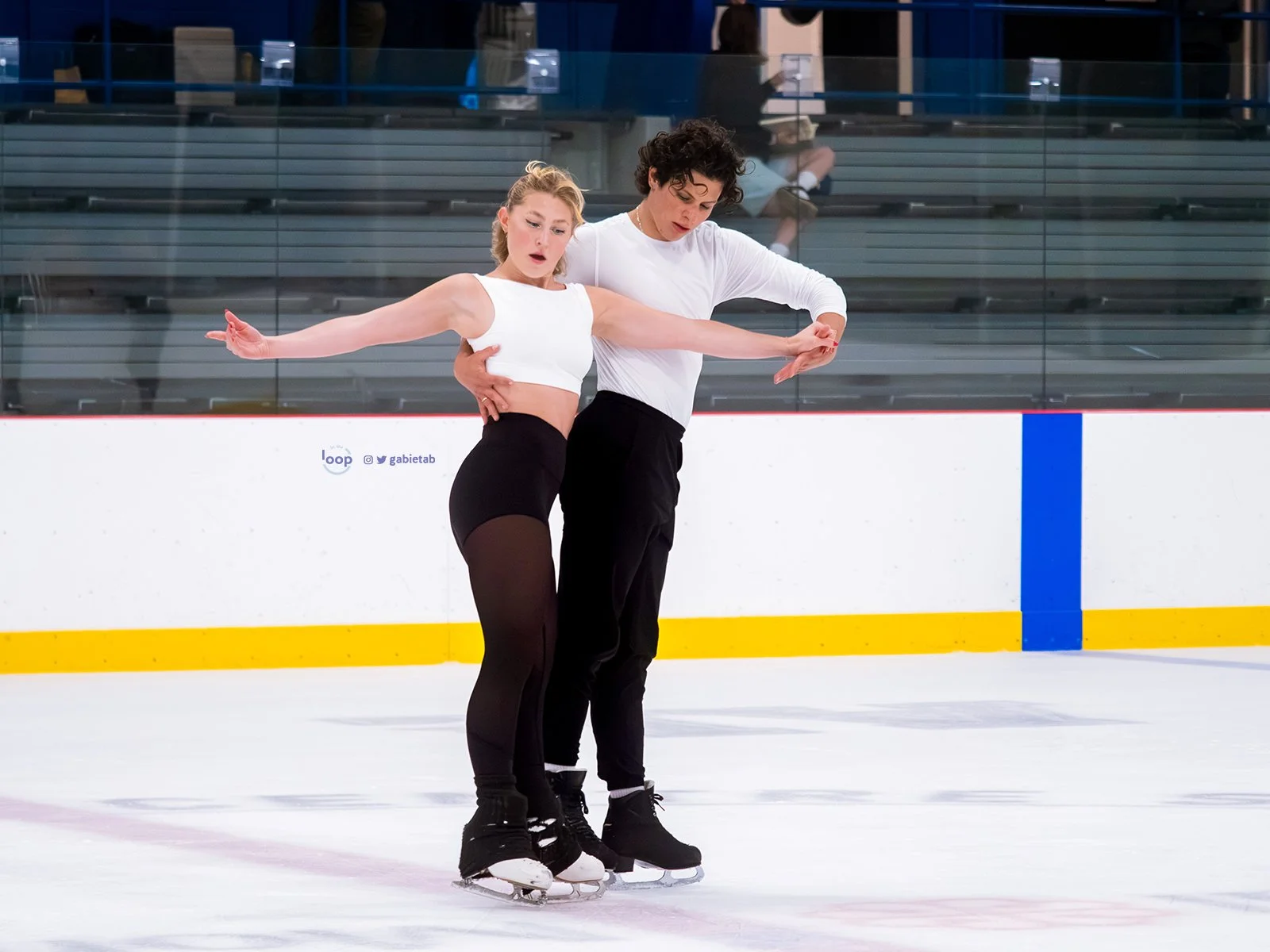
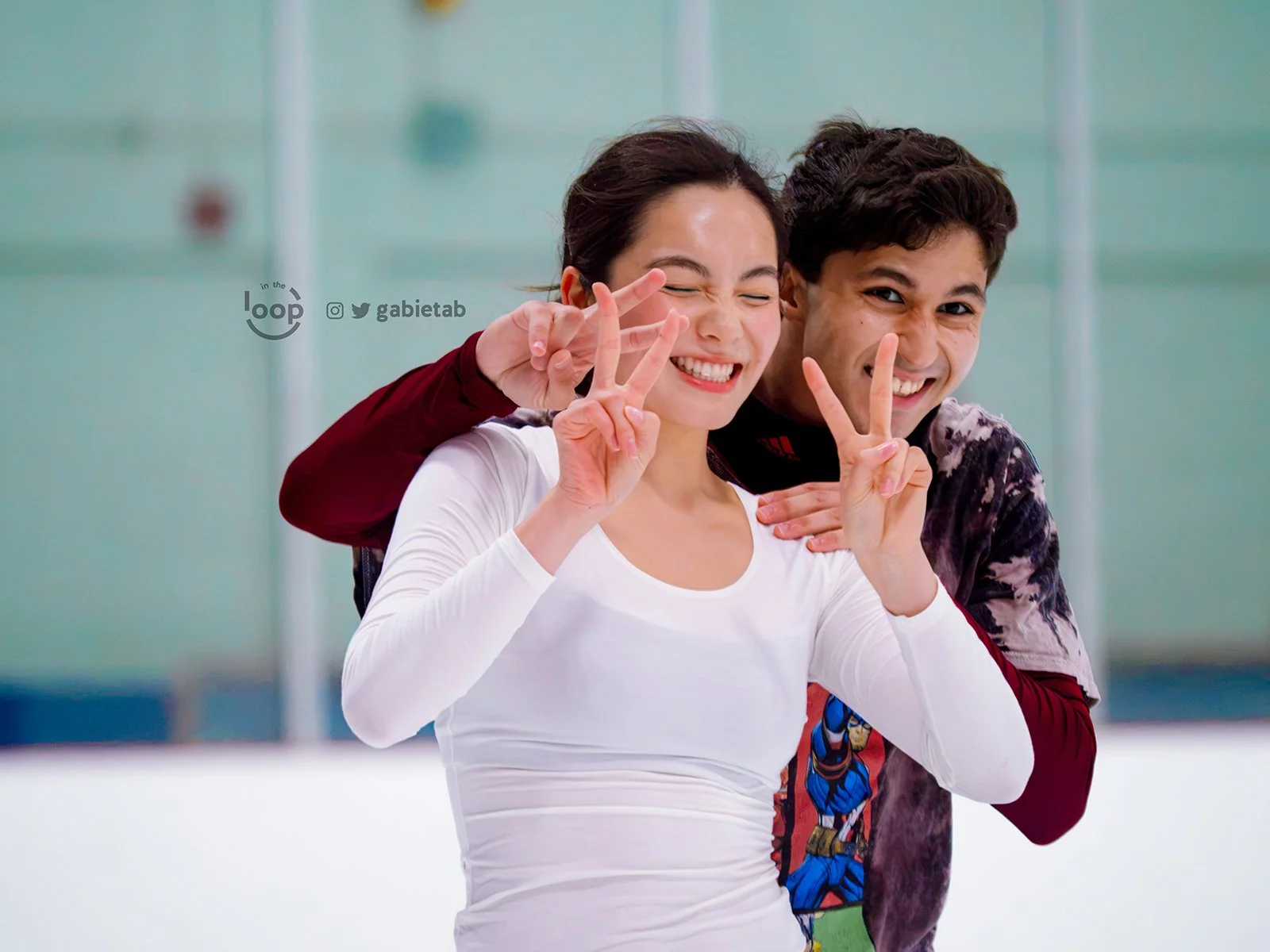
A magical partnership for Alicia Fabbri and Marko Gaidjenko

Partnering up together

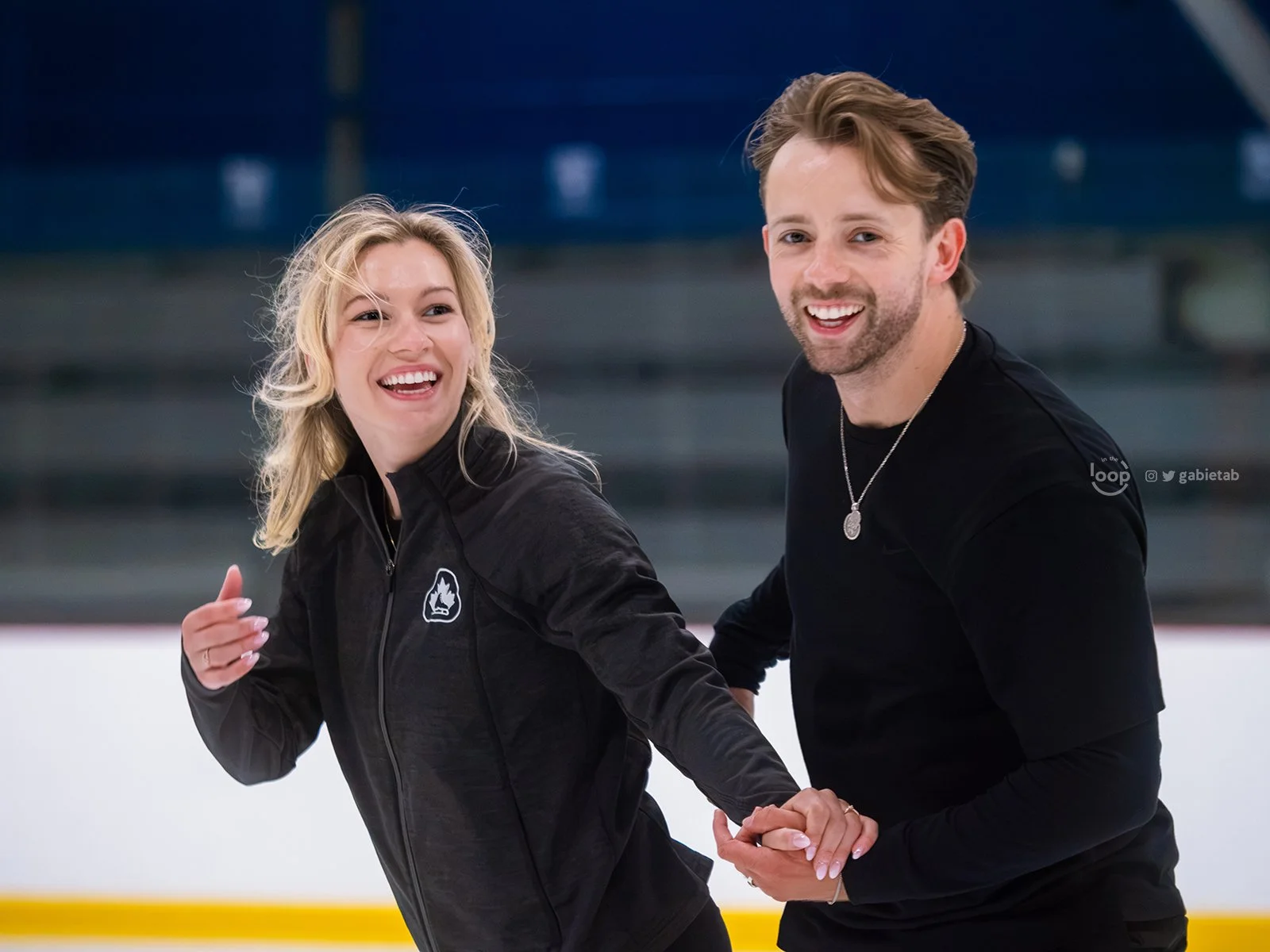
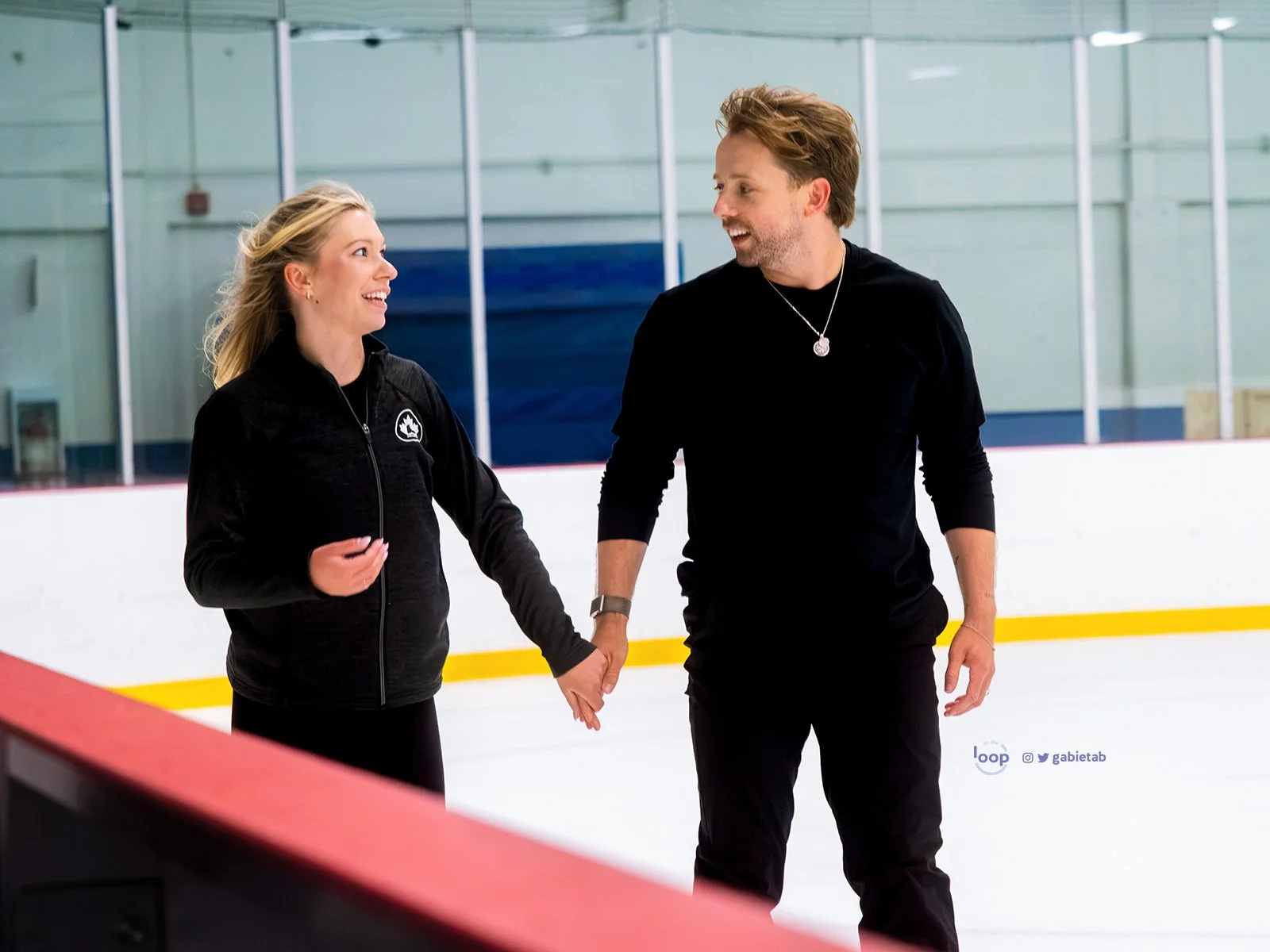
Alicia: Basically, it was Marie France that messaged us separately, and she was like, "You guys need to skate together”. One day, they kind of organized a mix and match at the rink, and all the single skaters were kind of switching and skating together. Marko was there.

Marko: Have you guys heard of a mix and match today? It was a thing when everyone split because they happened suddenly where everybody split. We had five girls and five guys…

Alicia: I think we were seven girls and five guys. The guys were busy!

Marko: Something like that. Yeah, we were switching partners every one minute.

Alicia: We would do an exercise five times differently to try out with everybody.

Marko: It was the first time we had a tryout on this type of thingy. It worked pretty well with Alicia. We arranged the tryout the same week— end of the same week, and since then it was just like, boom, it worked!

Alicia: We’re not going to let go of each other.

Marko: It worked. Yeah! It was something like that. Before Alicia, I had a couple tryouts here and there but nothing really worked. I had a tryout in France, and then I went to the U.S. for one tryout, and pretty much yeah. I was still very open for any other tryouts. But with Alicia, it worked so well, like everything. The match, the character, like what we have was just magical.

About Alicia’s last partnership

Alicia: It was not my decision. It kind of happened suddenly for me... I mean, I was hearing about it here and there from people at the rink, and then it got to me at some point. It was pretty hard but I think we knew that the partnership was better off alone. We were two very different people, our communication was not the best, and working together was hard sometimes. I think at that time I was struggling just because I thought I wouldn't find someone. I knew there were a lot of splits happening but there was nobody that I really saw myself skating with. I'm tall for an ice dancers so it's hard to find a tall guy. For me, that was what was hard. I wasn’t sure I was going to find someone. I kind of accepted the fact that maybe I wouldn't compete this season and that I would take time to work on my own skating. But then he showed up! He showed up two weeks after, and then it went pretty fast. It's super nice. We're two really similar people in the way we work and in the way we are generally. It makes understanding each other really easy, and communicating is amazing so far. Of course, it's new, but I think after all the experience we both had in previous partnership and restarting a new one, at this time in our life, I think I'm very grateful for that. We have so many lessons that we learned on both sides and we really want to take care of that relationship, and we know how to do it.

Any challenges so far?

Marko: I think figure skating is pretty challenging by itself. Like waking up at 5 a.m. is pretty challenging to me! But no, of course we face challenges every day. But we found this way of communicating, and we're both trying to be adults and grown up. We're trying to manage this supportive and very caring atmosphere we have between each other so that really helps. Sometimes she sees me struggle where there are days when it's harder than others, and then she's just being rock solid. It helps me out of this state and on the ice especially. I think that what really helps us maintain this healthy relationship on the ice. It’s what we really really really adore. It's beautiful. I'm very grateful for what we have right now.

Competing for Canada instead of Estonia

Marko: We put some pros and cons together. Estonia is very very close to my heart, and I really love my country. Skating for Estonia would mean a lot to me but skating for Canada is also something I wanted to experience because we have a good field of ice dancers in Canada right now. It's going to push us to get better because competition is very high. I feel like this sparks a fire inside us even more. In Estonia, there would be no one except us. We would be national champions straight away. It would open doors everywhere, which is great and it's amazing where we would compete everywhere. But at the same time, I think it's way more rewarding to achieve it for Canada. Our plan is eight years, so I think in eight years there is a lot that will happen. A lot of new stuff. We're gonna try to show better results every year. We want to build something beautiful, not only for us but also for the future of Canada. We want to sustain this ice dance field and keep it highly competitive.

Alicia: There were a lot of thoughts into it. We both represented our own country. Obviously, I was super attached to Canada. I have been representing Canada for 10 years internationally. It’s the same thing for him. That's all we knew. But I think we were really good. We want to skate together. We want to make this work. What is the best for our career? We put the pros and cons.

Marko: It ended up Canada being a little better.

Alicia: There are definitely a lot of people in Canada but we're two competitors, and I think we really want to fight first. It pushes us at training which is nice.

Goals?

Marko: Long term goal, of course, is going to the Olympic Games. We're not talking about results right now. It's been 10 weeks. We're skating together and we're going with the flow. Everything so far works pretty well. Like we said, our communication is great. Our programs are looking good. I think we're happy with our choices we made so far towards everything we did. We're gonna see where we're gonna go. We have a competition in four and a half weeks [Championnats québécois d’été]. We're going to show what we achieved in these three months of practicing together. Hopefully it's good. Maybe not. We don't know! We'll see. But I think it's growth that matters. We'll receive feedback and move from there. Right now, I don't think further than these next four weeks.

Alicia: For this season, we feel ready. Our programs work well and it went really fast. Everything was working amazingly. We want to show the potential that we have at Summer Provincials, and hopefully be able to compete internationally this season. We would love to go to Worlds for Canada this year so we're gonna do everything we can on the ice. We control the way we skate and we’re just going to do our job.

Programs

Marko: We did both programs with Marie France, and we have the help of Sam Chouinard. We work with pretty much every coach so they all have some sort of impact on the programs. That's in general how our school [IAM] works. Everybody is trying to help, and we take some stuff from this coach, sometimes from this other coach.

Marko: For rhythm dance, we're going with Billie Eilish. There's a mix of songs.

Alicia: There are quite a few in there. It's interesting. I think it shows our characters. There's like a great relationship and we're kind of like playing on that.

Marko: We both enjoy the music. Yeah, we both like Billie Eilish [Note: Marko pronounced it as Billie Eyelash].

Alicia: We both didn't want to do classical waltz.

Marko: Well, I would do masquerade, but Marie-France [Dubreuil] said no. But we went with Billie Eilish because we both enjoy her music. I don't listen to her that much, but I do enjoy her music! We felt the need to add some hip hop into the season because I'm sure there will be a lot of similar ideas throughout the season because there are so many couples nowadays. Adding some hip hop into it, I think that's an interesting choice and we went with that. And for the free dance, we got Caught Out In The Rain.

Alicia: It’s a great free dance to show the connection that we have. We're kind of building a storyline around it and it's been amazing. It's super powerful,

Marko: It's like a Jazzy Soul, Beth Hart type stuff.

Alicia: It brings out the best of our skating, so we're really excited for that!

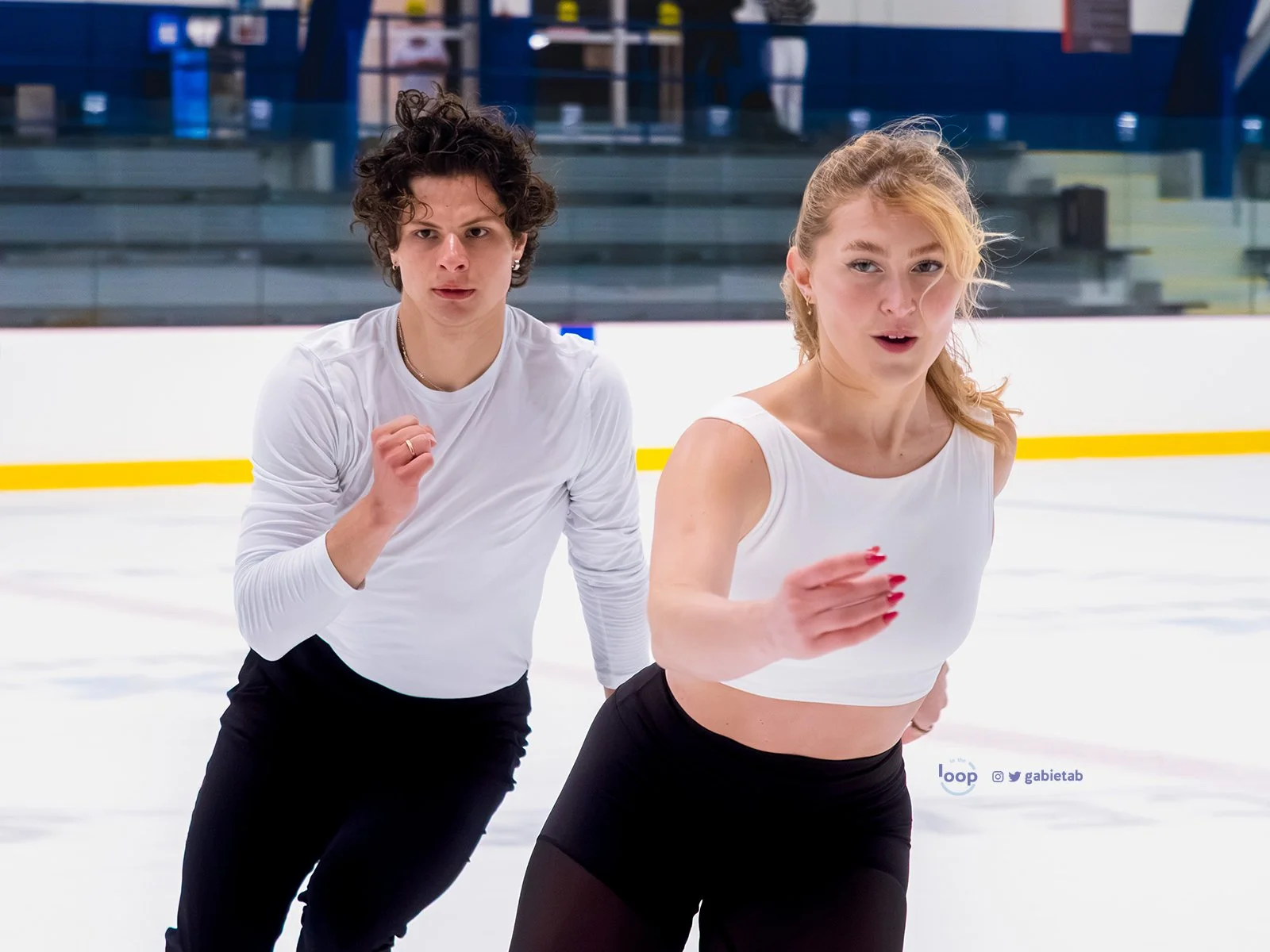
Meet LiLak: Hannah Lim and Zachary Lagha

On partnering up together

Hannah: After Worlds, it was known within the school [IAM Ice Dance Academy of Montreal] that I split with Ye [Quan].

Zachary: After the Olympics, we re-evaluated ourselves [Zak and Marjorie]. We are very different. Personality wise, it was superb because we worked really well together. However, when it came to artistic vision, we were very different and sometimes we were at an impasse. During our career, there weren’t any fights but let’s just say there were some hesitations artistically. We had to ask ourselves if this could work out for the next four years, maybe even eight years… maybe yes, maybe no. After an Olympic cycle, it was the best time to try something else. There was stuff going on so when I was sure that it was time to change, I gave Hannah a call.

Hannah: He texted me like he was like "can we have a call?”. I didn't want to have my hopes up because I was wondering what was going on and I didn’t know. But then we called and chatted a bit, and then went through the process of possibly trying out together.

Zachary: It’s different but, honestly, it hasn't really been challenging [being in this new partnership]. Having to work with someone new takes work but it’s been a pleasant process overall. It’s a good experience to have. While I still need to learn new things with Hannah, for my own personal career, this is a great opportunity to learn. Since our initial tryouts, there was one week of adaptation with our reflexes.

Hannah: When you first get into a partnership, you're so used to skating with one person. Their habits, and their ways of moving. I thought it was gonna take longer to adjust but it actually only took a week to kind of get used to it. After a week or so, it almost felt normal. I think challenges would maybe be seeing each other under stress or doing runthroughs when cardio picks up, Stuff like that, I think, would maybe be a challenge that we need to overcome but we take it as it comes.

Zachary: I think that also we have a similar dance-style background so that made it easier as well.

Hannah: You did say I get frustrated faster than you,

Zachary: I think so? What do you think?

Hannah: Maybe yes? 😂 Because I feel like I'm rushing, and you're like it's okay, and I'm like, is it!?

Zachary: Yeah, it is okay.

What they admire and appreciate about each other

Zachary: I think I admire Hannah’s work ethics. I think you work very hard. I thought I was working very hard, and then in the first two weeks she broke me. She's open-minded too. It’s just so fun to go to training every morning. It's serious but at the same time we can have fun.

Hannah: I also admire his work ethic. I thought the same for him. I thought I worked hard but I feel like Zak works harder. I think it's the fact that we can go back and forth with ideas on the ice really easily. We also have very similar ways of dancing, ways of moving, and music styles so we can talk on and on about that on and off the ice. I really appreciate that.

Training

Zachary: It doesn’t change [not being able to compete internationally this season]. It's more like it's more of a sprint. It is business as usual.

Hannah: We’re taking this season like an international one because we don't like to get in the mindset that we can chill. We still think it's just as important to showcase our stuff

Goals

Hannah: Short term would be looking more towards Canadian Nationals because our season is not going to be an international one. We're looking to have our best performance at Nationals. Maybe a podium? Somewhere around the top. We’re just being ambitious because we know there's a lot of teams in Canada. Long term would be Worlds and the Olympics, and just trying to climb our way up.

Motivation

Hannah: It's going to be hard to stay motivated because like all our friends are leaving, and everyone is getting Grand Prix assignments. I'm not gonna lie, I am a jealous person so I'll get jealous and frustrated, but I think we can talk about it, and we'll definitely channel that energy towards bettering ourselves at home.

Programs

Hannah: We can give a bit of a hint. For the rhythm, as you know, it's waltz and the pattern is coming back. We're really excited about that. Everyone is having their own take on the waltz; I've seen some latin waltz, polka waltz, jazz waltz, like a bunch of tango waltz, and a lot of different styles. We wanted to really take our own take on it which is just showcasing the waltz. Like, here is our waltz, we want you to see it, and we’re not hiding it. So I think we’re going to go more of a classical route and kind of going back to our roots. I've always loved doing classical skating like ballet and stuff like that, and Zak thinks so too. I think I said this in one of my reels, but I just love the waltz that we chose. I was like, if we're doing waltz, I want to do that, and then he was like, I love that waltz too. So yeah, we just took one of our favourite songs.

On which country to represent

Hannah: It was pretty difficult. Korea really felt like my home for a bit, my parents are both Korean, and I represented Korea most of my ice dance career. That was what I was really used to. The fans, the KSU, and their support was everything to me. I was really going back and forth. I have both passports, so I could equally decide to stay with Korea or to stay with Canada but I decided there were not so many Korean guys. I was thinking there are not many guys that would switch to Korea for me, and I already did that with Ye. I just thought, well, if I'm skating with Zak, he's Canadian and I already have a Canadian passport. It seemed like the easiest route. The only thing was that I needed to take a year off. In the end, I thought that was maybe more beneficial for myself.

About social media

Hannah: A long time ago, I was really into YouTube. I was into YouTube vlogs, vlogging competitions, and like training and behind the scenes. Now, people are shifting away from YouTube and long from content to shorter stuff like TikTok and reels. So I've been trying to do that more. I love vlogging and filming what I do in a day. I find the little trends more fun and silly things like those are more of my vibe. I always look for partnership content and little funny things that Zak and I can do together. Before getting on the ice, or after training, I'll ask if we can do this and he’ll say "Of course, yeah.”

Zak: If I do it with her, it’s okay.

Team name

Hannah: LimGha is not my vibe. I like LiLa! A fan messaged me and was asking me what our team name was. I said I'd do a poll on Instagram, but I think I never did it, but I think I definitely prefer Lila

Zak: How about HanAk? 😂

Hannah: Noooo! Someone was like HanZa.

Zak: HanZa feels nice!


An update! Hannah told us they want to be officially called LiLak because it sounds like the flower!

We’re wishing the best of luck to LiLak in this new partnership!

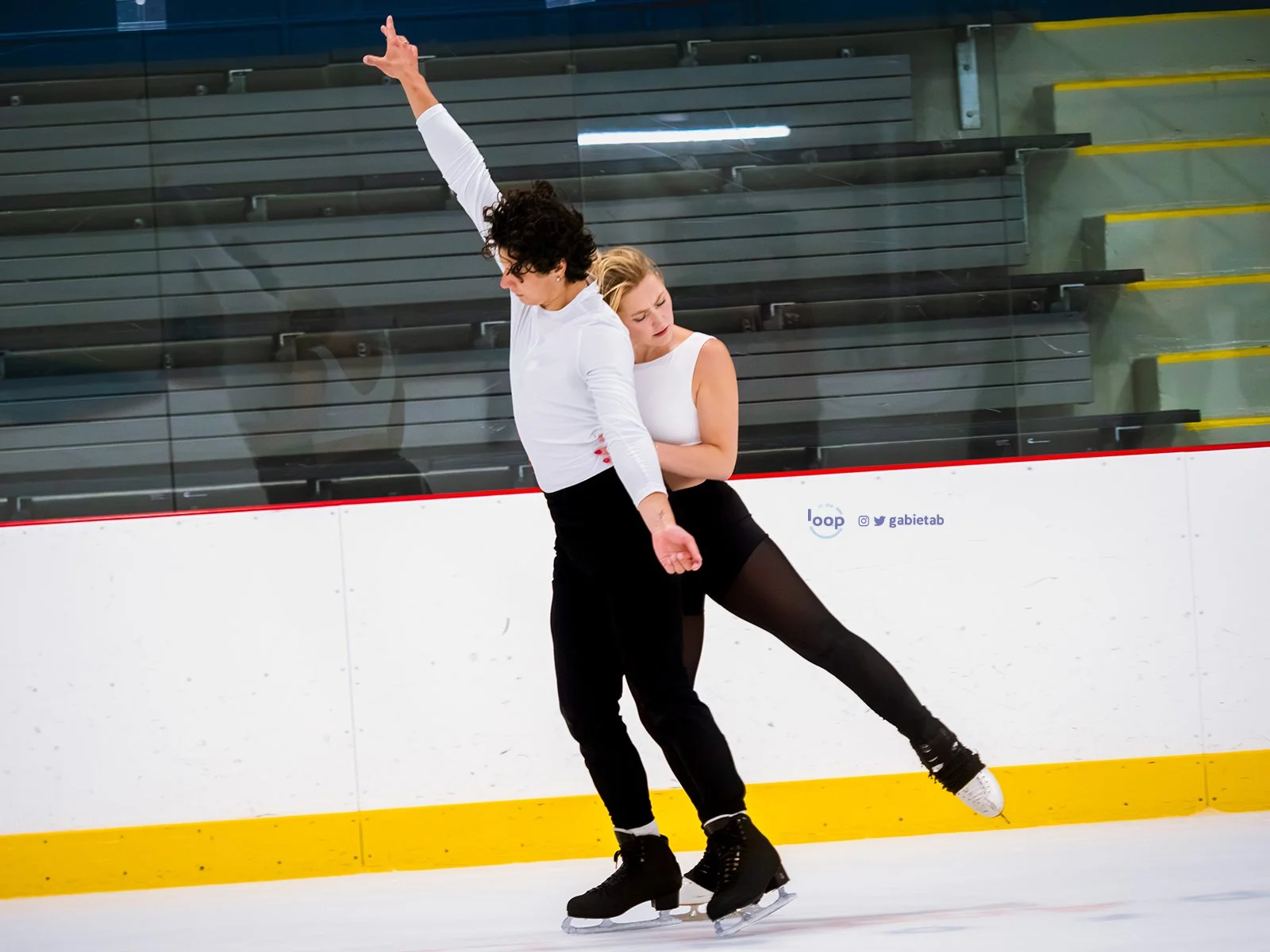
Marjorie Lajoie and Jean-Luc Baker: New beginnings

About their partnership…

Marjorie: There were some big months after the Olympics that were emotionally intense but it all turned out for the best. I’m very happy with what came out of it. Marie-France is the one that approached him. They actually went out for dinner and that’s how it came up that he was interested. We did a tryout and everything felt natural and it went well. We took each other’s hand, we looked at each other, and the communication was going well. I like to say that it didn’t feel like a tryout. We connected right away and it progressed naturally from there. This was the only tryout I had to do.

We’re really aligned in our goals. For him, he wasn’t sure if he’d come back. As for me, I didn’t know what would happen with my career. Both of us are just really grateful to skate. We just want to be in the moment together and let people feel in the moment. We want to share our passion for skating and make people feel connected. Obviously, we want good results but above that we want to create something.

Jean-Luc: I missed skating as soon as I stopped. It has been great choreographing at the Ice Academy of Montreal, and working around the world. Deep down, I missed the freedom of skating, connecting with myself, and expressing emotions I don’t know how to put into words. Then there is sharing that experience with a partner is a whole new world and connecting with a whole arena… I’ve done so many things outside of skating that I was looking for that kind of pressure and that push. I've done things that I was like, oh, wow, I've really done some cool accomplishments, but something that I knew in the back of my mind is that I still had it inside of me to give back to the sport a little bit more. I didn't really know how to make that come to reality because in my last partnership, we stopped skating, and I'm not the tallest skater in the world, so there's not many opportunities for me to be able to connect with somebody. It needed to be something that made sense for me. 

Marie-France just came to me in the beginning of May. I made one joke like “oh, I would even skate for that country” and she's like “You would still skate?” and then I was like yeah! Then the next day she's like we need to go grab dinner, and asked me about skating for Canada. I was like absolutely. I skated for the U.S., I'm British, I’m working on getting Canadian citizenship. So many different things. This is such an intense sport  and people only really see the final product. Sometimes the final product is amazing, and sometimes it's not, but most of the time, what we do here, it's not that amazing until we can get to that final product, and to be able to endure those discomforts. Being able to communicate with somebody and find the light in the darkness is really hard to find with somebody. I mean, everyone knows how amazing Marjorie is like a little ray of sun. It's just so much fun to be able to share what I love with someone that's so emotionally intelligent and willing to explore deeper inside of themselves and also become a better skater.

Transition from training mates to partners…

Marjorie: I like the version where we skate together. He already had such a good reputation and a good personality. I knew him, but from further away. Being in his bubble, and being together, it's amazing. We get along so well, and we started to know each other very well too. He's so good at communicating. I think it's just a privilege to be a partner now. 

Getting back in competition shape…
Jean-Luc: It's a journey, that's for sure. I forgot how muscles felt deep internally. I was working out quite a bit outside of the last three and a half years. I was lifting weights, I didn't ride a bike, I did walk up some stairs every day to go to bed, and that was pretty much it. In terms of cardio, it's a totally different beast but I'm learning and I'm not like being too aggressive in terms of making sure I'm in this perfect shape straight away. It's really important that I build the right foundations to make sure injury prevention is there and not that I need to look competitive right now. I mean, for me it's really important that I'm in a position to build a really strong foundation for Marjorie and I so we can do the things that we want, both competitively and artistically. And we’ll see how we can push forward from there.

How does Jean-Luc feel about competing against his fiancée (Olivia Smart)... 

Jean-Luc: I love it. We've definitely had some conversations at home about it. It's going to be a process for our relationship in a great way. Everyone, even at the Olympics, People magazine was like Heated Rivalry. I was like, oh man, this is just the narrative that we live under, especially now that I'm coming back to compete. I think it's amazing. She's been my best friend for 14 years. I went to the last Olympics in 2022 with her as my best friend, and that's when I told her I loved her. I proposed to her at the last Olympics [Milano-Cortina 2026] when she competed four years later to the date that I told her that I was in love with her, and now we get to both do what we love together. Just like every relationship, it's gonna have ups and downs, and we're really willing to work through everything to get to where we are now. I think that being able to compete against her, we're gonna have so much fun. We're highly competitive ourselves, and so are they, and out there you're alone, so like I want the best for them, because I know they want the best for us. From the moment we step on the bus at that competition to go to the event or to go to practice, it's about Marjo and I, and we're in our bubble. And then we can live our lives outside of that, but it's important that we just stay connected and that we're locked in together. 

Being a choreographer and, now, back to being a competitive skater at the same time…

Jean-Luc: Realistically, the hat that I'm trying to wear more of right now is the skater. I did choreography this season. For Loicia Demougeot and Theo Le Mercier who will be at NHK with us. I did choreo for Alexandr Selevko most recently. I did Marin [Honda] and Shoma [Uno]’s free dance. It's been super cool but I have a short time where I can allow my body to be locked in for this sport and I'm trying to prioritize that. Over the next couple years, I will still love to do choreography, but as of right now, hopefully and thankfully my schedule is slowing down, so we can finally put more energy into this. We started, and we've probably skated a total of like three weeks together in the last two months, but that's just because of contracts that I knew I has and that we've discussed before. In terms of choreographer, I love it. I'm super excited. It might be super weird at NHK because I'll be like, okay, I did that program, but it's fine because it's so cool. I just want to create with Marjorie and anyone else that wants to create with me. I love giving people the opportunity to be themselves through their movement on the ice.

Marjorie on attending Your True Step… 

Marjorie: I learned so much. I'm very grateful, so happy. I wasn't expecting to travel this summer and it's so much fun. I had the chance and opportunity to be on the ice with everyone and watch how Jean-Luc teaches. I learned a lot from that. I was doing some dance classes with the kids, it was really fun. So that's what we did, and we also trained, of course. It was fun to just watch and be part of learning from everybody there. It was really fun.

About the golden waltz…

Jean-Luc: It's one of the compulsory dances which is probably, to be honest with you, one of the hardest ones you could be given. Quite frankly, I’m super grateful that the ISU decided to implement this because it's very hard and it exposes a lot. I mean, even for us, obviously we're a brand new team but you're gonna see teams struggle, and the problem is, with this, there's gonna be so much comparison to what Tessa and Scott did with their compulsory dance. That's the baseline. Obviously, Tessa and Scott are literally the most decorated and some of the best skaters of all time, but on top of that, their generation trained compulsories day in and day out. 

From an outside perspective, from a fan's perspective, and even some of the judges that judge those compulsories will be expecting to see that. What we're judged on now is not that. We’re judged on key points and levels, and having individuality. However, they want it to be the same but different. So you're gonna see a lot of different interpretations of what the pattern can look like because it is an optional pattern. You're gonna see a lot of interpretations of the way it's skated: the leans, the rise and falls, and I think that's really cool, but I think that there will be a culture shock for the first couple months up until maybe the last Grand Prix. I’m not saying that because we're there, but I'm saying it just in general. Until people realize that everyone has a different interpretation of what this pattern can be like because of the judges and how it interacts with the program… The GOE is going to be what they want to do regardless. Last season you could see a team get a level two or level three on a PST. It changed their placement dramatically. So there's a lot of interest in how to create a higher technical standpoint on it.

I think that you're gonna see teams that don't have the time to level up or find ways to finesse it. You're going to have one side of the room be like: it needs to stay authentic, don't change the holds, don't change the pattern. The other side of the room will say: well, let's be creative, I want to see different things, let's see it flow differently. So, I think that everyone's going to be upset, and everyone's going to love it, but at the end of the day, as long as we love what we're doing, I think that's a matter's most

About competing this season

Marjorie: We're so excited about Japan [NHK Trophy] that's going to be amazing. We're really happy for the opportunity. We can't wait to create and show the world what we can do together. I think it's so fun, and we feel very lucky and grateful that we can compete internationally the first year that we’re together. 

[Does that affect your pacing of training this summer at all?]

Jean-Luc: No. We have two choices. We can either freak out and be like, “I haven't competed in three and a half years" or we can acknowledge that I haven't competed in three and a half years. It's gonna take some time for us to get to that point. By the time we get to NHK, will we be the best? Maybe we don't know, but that's so far away for us to be looking. Our plan is to be ready for that event. This is a four year cycle that we're working under and we want to be able to grow and push ice dance in Canada. We want to keep it on the top of the world stage over the next four years, so we know that's not a right now kind of thing. We need to grow progressively.

Programs…

Marjorie: I like to say that for the rhythm dance, we want people to be able to have fun with us. We want to connect together, but also with the crowd, and we want people to dance while sitting there and just to have fun. For the free, we want them to go into our world. We connect together and it’'s just us on the ice. We create a moment where they're just watching.

Goals…

Marjorie: Short term, we want to be smart. We're getting back in shape. We want to prevent injury and just feel comfortable with each other.

Jean-Luc: We definitely want to win the National Championships this year. That's what's on our paper. In terms of short term goals, we don't really know. I don't know how short term is like… Like I want to get through the rest of today! In terms of foundational things, we definitely want to win the Canadian National Championships this year. We would love to be on a Four Continents podium. It would be insane but we need to reach for it. We want to be in the top eight at Worlds because we really want to give ourselves the opportunity, and also other athletes, for the future. We want to keep the opportunity for teams to compete at a high level in ice dance. We have some amazing teams. What we can do is just focus on the rebuild of me coming back to competitive skating, creating moments together, and then trying to keep Canadian ice dance on the map.


Interview with Wesley Chiu

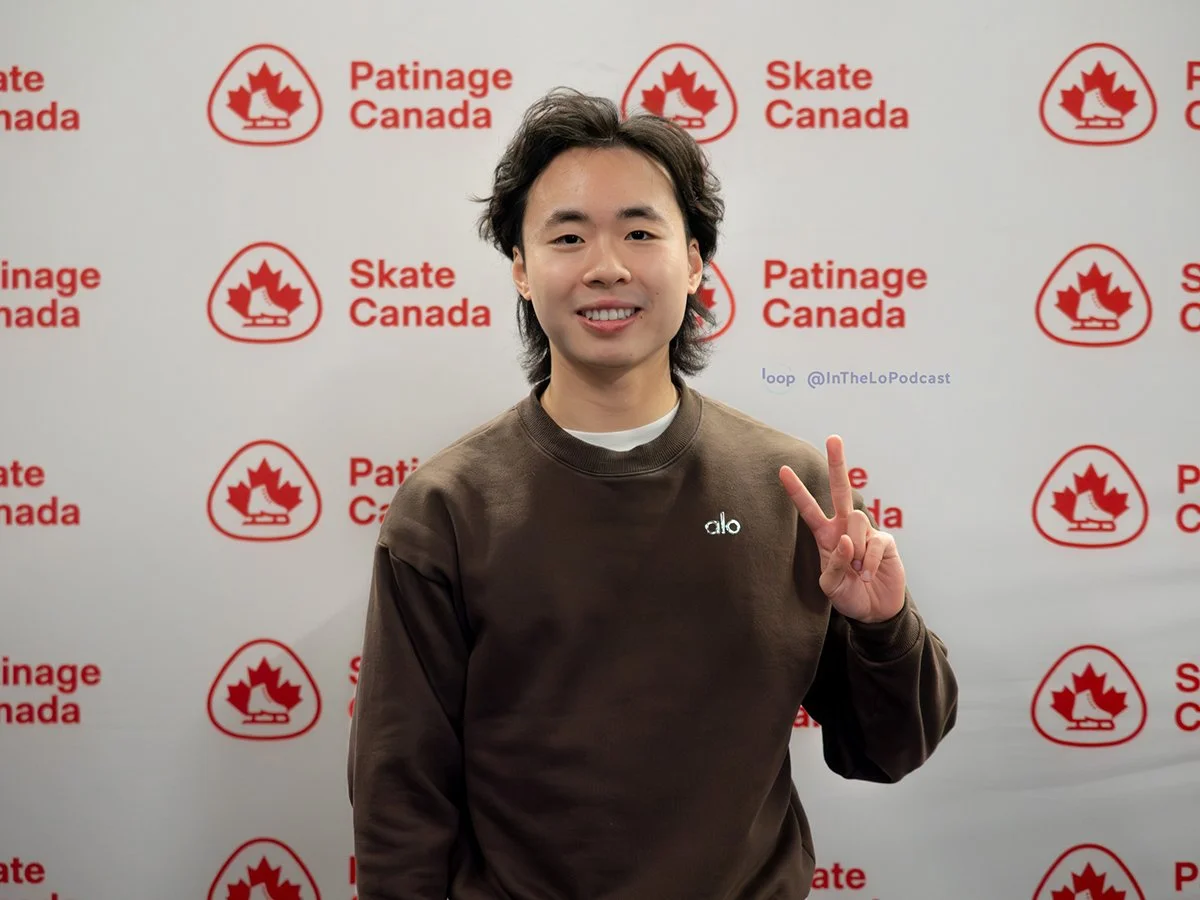
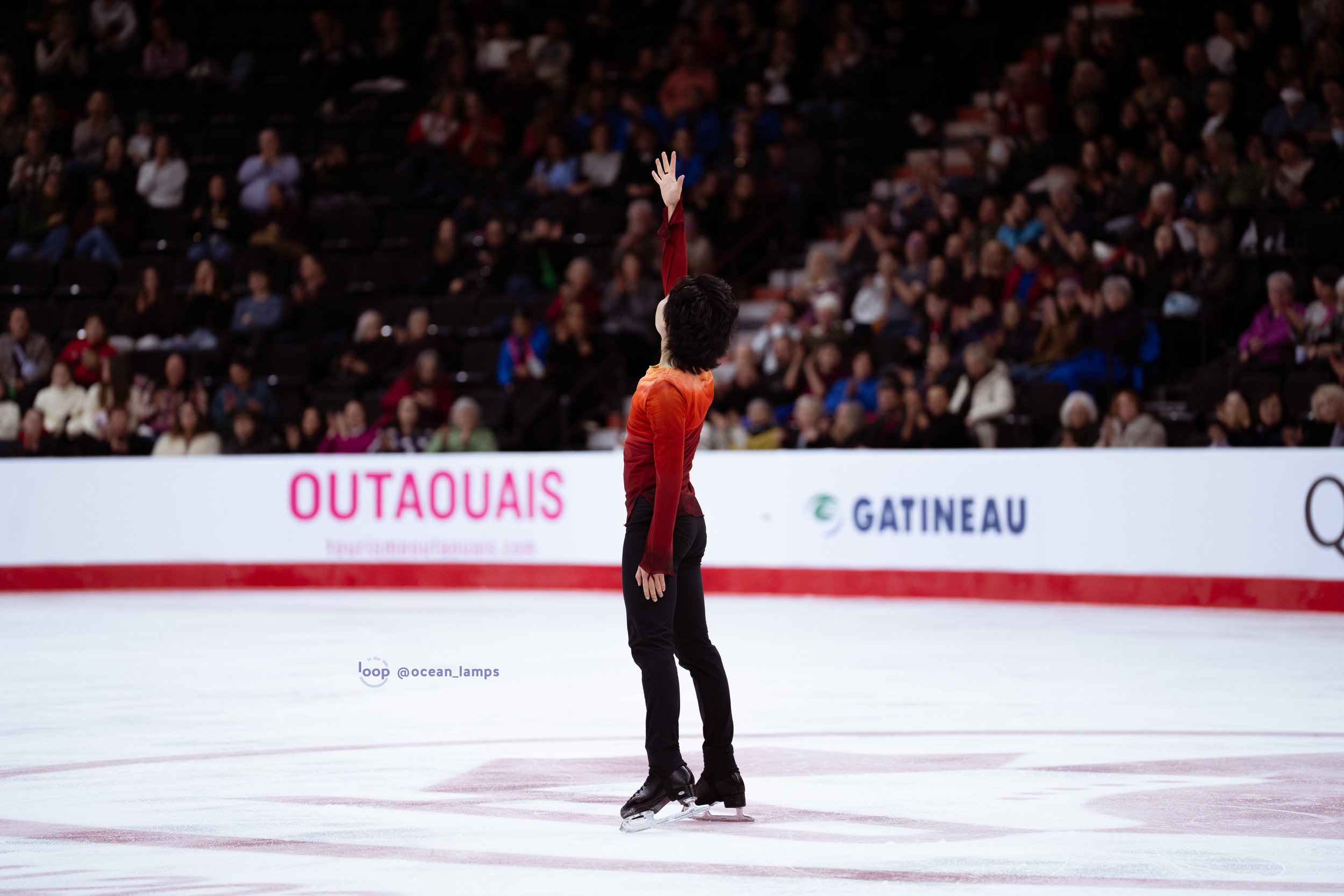
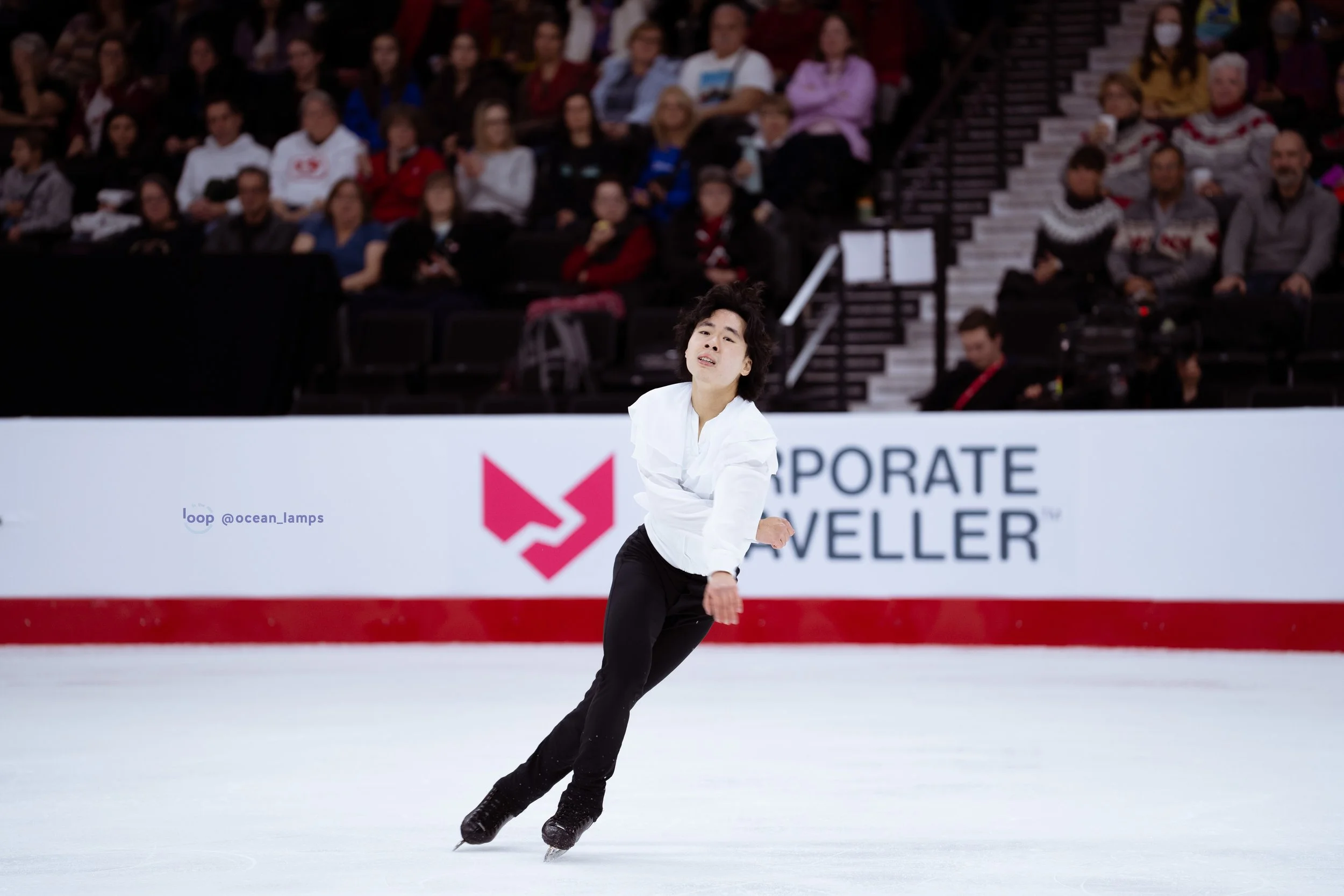
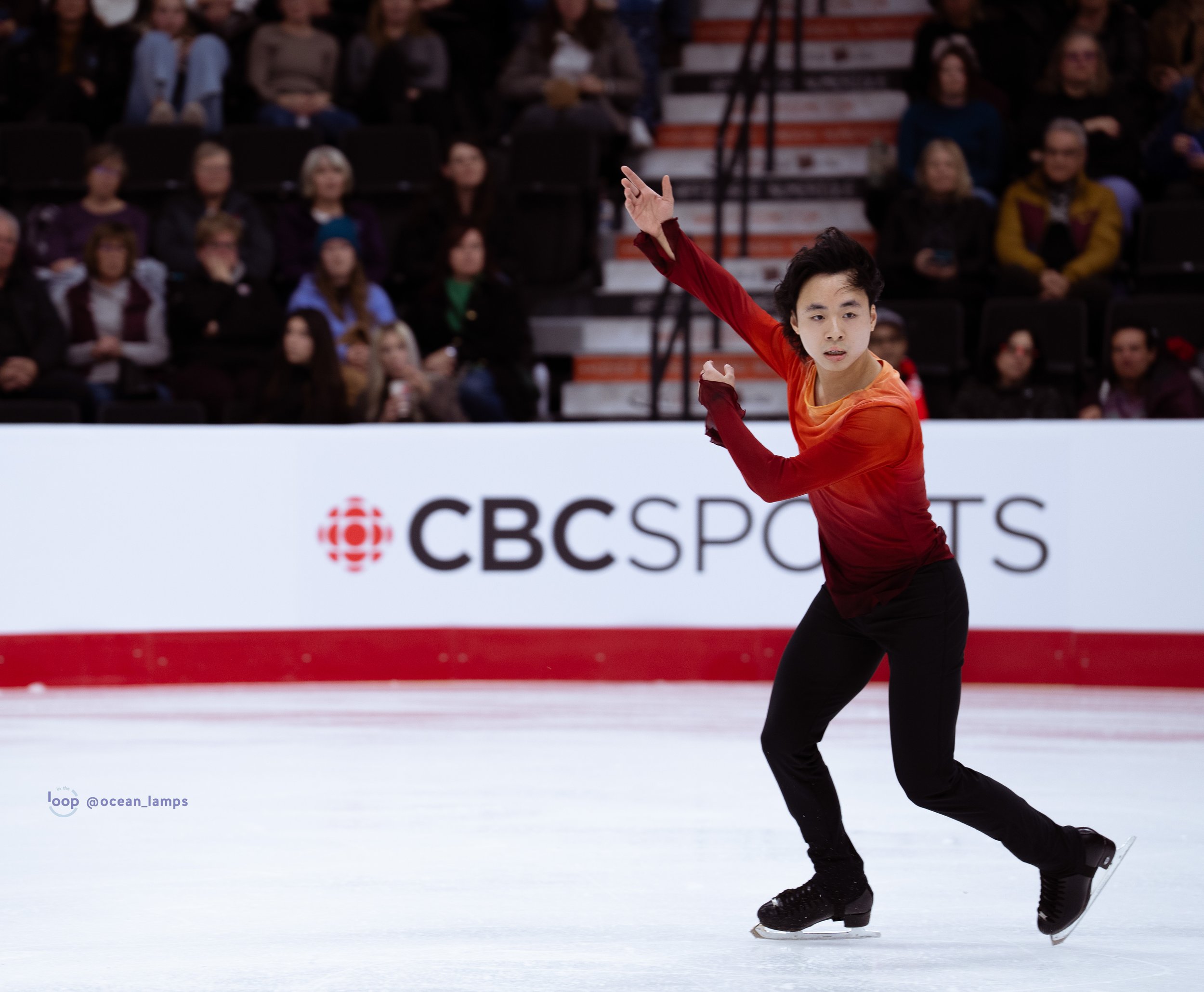
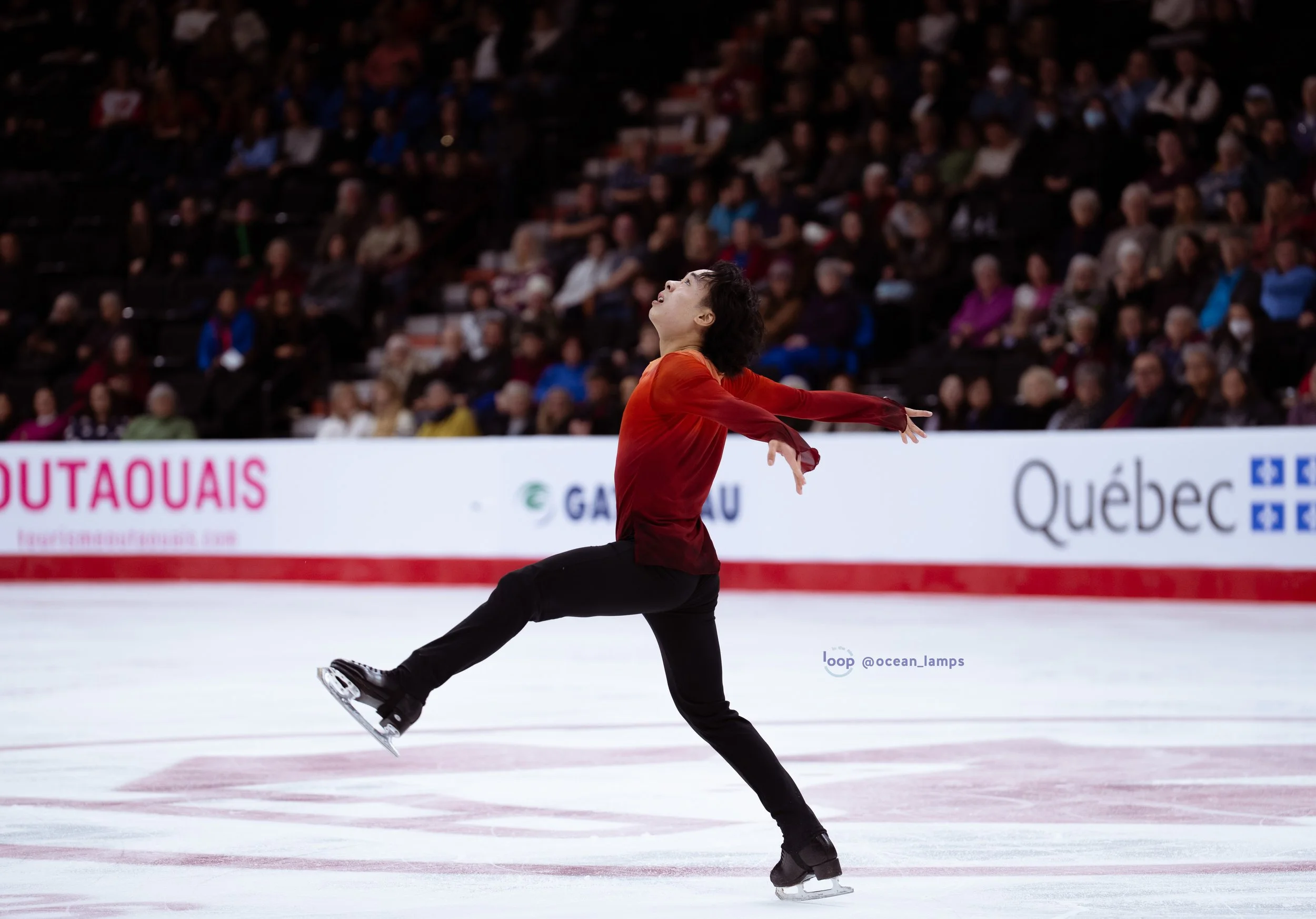
Maryam had the chance to chat with Wesley Chiu, 2024 Canadian National Champion, about his skating journey, his comeback post-injury, as well as his current interests. He just finished competing at the 2026 Canadian National Championships where he finished in 4th place with a score of 241.48. He has been assigned a spot to compete at the Four Continents Championships as his last international assignment of the season!

Interview, editing, and action shots by Maryam! Special thank you to Niamh for coming up with the questions.

This interview is also available in a podcast format. You can listen to it on Spotify! Or if you prefer Youtube, it is available on our Youtube channel as well!


Maryam: So, good to see you. I wanted to ask how you got into skating. Can you talk about the CanSkate program? You started skating pretty young at four or five years old. Do you have any advice for young people getting into skating, especially at a year where there might be increased attention and a lot of parents and/or children find themselves wanting to get into the sport?

Wesley: I started skating when I was four, like you said. I was trying every different sport. I was really athletic as a kid. I really liked just moving around. And I think I had a lot of energy. And naturally, as a Canadian, I was put on the ice just at my local rink at the Richmond Olympic Oval. That’s where I train now, and also where I took my first few steps. I started with their learn-to-skate program, then moved on quickly to the CanSkate program with Skate Canada. That's really when I started to enjoy just being on the ice. I didn't really know much about figure skating at that point. I just knew I wanted to continue this. One of the coaches at my rink back then suggested that I try figure skating. I went into their junior academy program, which is the next step after CanSkate — that's where I started to learn how to spin and jump. And I really enjoyed it.

I think in some countries, parents throw their kids into the water to learn how to swim. And Canadians, they throw their kids onto the ice.

I definitely did swimming as well. I actually played tennis for a while, alongside skating. 

Were there any other sports that piqued your interest, such that if you weren't skating, you'd be interested in doing? 

Wesley: I think tennis was the biggest one. It was the one that I did for the longest alongside skating, but eventually I had to pick one. 

I saw that you have a lot of interest in hiking and cycling as well. Do you have any trails you recommend on the West Coast? 

I live in Vancouver, so hiking is very accessible. One of the hikes I did a couple of years ago was called the Panorama Ridge. 

I've been wanting to do that one! I hiked up to Garibaldi Lake, so, half of it.

That's also nice as well. 

Did you do it as a day hike or did you end up camping?

Once I went to Garibaldi, and then another time all the way up to the top.  It's an insane hike. I definitely recommend you do a warm-up first.

Start extremely early. 

I started at 7 a.m., and it took nine hours, I would say. The view was totally worth it.

 You had a really good short program here with a personal best. You had a lot of fire and you attacked so many elements. You had a good fight in the free as well. How did it feel being back in front of a home crowd?

It felt amazing. It was something that I've been dreaming about for about a year with the injury. It's definitely nice. The energy here is on a different level, I would say. It just feels good to skate in front of a crowd again, feel the energy. They really help me push through even day-to-day training. I feel motivated.

Your skating club seems very supportive. How is that environment like for you to train in? One of the rinks that your club uses was built for the Vancouver Olympics. Does that ever motivate you? 

I skate out of the Richmond Olympic Oval, which was coincidentally where I first started skating. So it's definitely nice. I've seen the rink evolve from back when it was a speed skating track, to the full venue it is now. It's definitely nice to skate under the Olympic rings every single day. I've been with the Connaught Skating Club for over a decade, so it feels like home. We're all just one big family. I've seen so many other skaters grow up, and I've grown up alongside them. It’s a very homey environment. 

 There are a lot of great coaches and former skaters involved with Connaught. How has that helped your progression in your career? Can you share any advice or support that they've shared with you that's helped you move forward, up to this point? 

Having those amazing former skaters around the rink is nice. Being around them, being able to ask questions anytime I needed. Kirsten Moore-Towers is one of the coaches with our pair program at Connaught. Liz and Patrick also stop by from time to time. Having them so accessible in Vancouver is a great help. Being able to discuss my struggles and knowing what they've gone through, and to really just trust what they're saying. They know a lot more than I do, so it's really nice. 

A lot of people say that figure skating is such a niche and elite sport; that there's very few people that go through exactly what you're going through.

Exactly. It's nice to have that sort of support environment at home. 

You had a breakout season in 2023 and 2024 with your first national title, your first senior championship, making the final group at Four Continents, and a home Worlds. Then, you had your season cut short with injury. Can you speak about the ups and downs, and that juxtaposition in general? How does it feel like to be back?

Definitely a huge rollercoaster of emotions. The momentum really started in the Grand Prix series of 2023 with Skate Canada and NHK. That's where I really started to feel comfortable skating in front of big crowds. The crowds in Japan are huge and it’s an amazing place to skate in. That really inspired me and got me comfortable being in the midst of high-pressure environments. Everything kind of fell into place nicely at nationals, and I was able to continue that momentum leading into four continents and worlds. So many new experiences, great memories. I was definitely hoping to continue riding that wave going into this Olympic cycle. But unfortunately, things happen, and it's a sport. It is what it is.

You were out for quite a while. Did you have time to get into any other hobbies or learn any new skills?

The thing with injury and surgery is that you can't really do much. You're stuck in that rehab mode. It has been nice to reflect on my career up until this point — I could step back, re-evaluate where I was at in my career and ask myself questions. Like, why I was skating in the first place, and whether it was worth it to continue pushing forwards, especially being off for so long. The biggest thing for me coming back was the fans. Being able to skate in an environment like Canadian Nationals, hearing the roar of the crowd, I think that's something I didn't get to experience and I definitely missed for a long time.

Injury does place you in a different mental landscape. It does teach you some things.

It makes me more grateful for every opportunity that I get, because you never know what could happen.

You've been to a good number of Canucks games. Do you have any standout moments?

I'd have to say the year that they made the playoffs. It was after Worlds, and before Stars On Ice. That was crazy. The whole city was buzzing. I remember just going outside and seeing that all the cars had Canucks flags on them. Everyone, the whole city, was watching. I think Vancouver really loves their hockey, me included. I got a small mention on their stories while they were in the playoffs, so that was really exciting as well. It's been a long time since they've made the playoffs.

Similar energy to when the Blue Jays played the-

The Dodgers. So close.

They were so close to having a parade in Toronto. You mentioned Stars on Ice. Do you think that you'd be interested in doing show skating at some point? 

Stars on Ice was a great opportunity. I will probably remember that for the rest of my life. I definitely hope to do more in the future. How that plays out is really not up to me. 

Thinking forward, do you have any pieces of music that you'd like to skate to at some point?

Nothing too concrete. I have very, very rough ideas floating around. I have been so busy trying to prepare for this season with recovery that I haven't really thought about anything beyond this season. One of the artists that I really enjoy listening to is Jackson Wang. He's a Hong Kong singer, also doing K-pop. I really love his music. I would love to skate to one of his songs one day, maybe.

He's quite fun. Do you have a workout playlist, or a playlist that you use for when someone gives you the aux cord at the rink?

Yes, I do.

What does it mostly include? Do you have any specific genres that you like? 

I really like 2010-era music, like pop, One Direction, old Justin Bieber. Those songs are really nostalgic, growing up and being born in 2005.

Always brings you back. I skate myself as well, and sometimes, in a rink session, I notice that whenever there is very high-energy music, people skate a bit more intensely. Do you ever feel like that's the case on a day-to-day session?

Yes, for sure. Especially when you're skating competitively and have been doing it for so long. It definitely gets dull sometimes. When we switch up the music — that's where the energy comes from.

Well, thank you very much for your time. Are you going to stick around tomorrow to watch any other events? 

Wesley: Yes, I'll be around for the women's.

I hope you have fun. I hope you have time to rest.

Thank you!


Wesley is set to compete at the Four Continent Championships! You can follow Wesley and what he is up to on instagram!

Interview with Auréa Cincon-Debout and Earl Jesse Celestino

Interview with Auréa Cincon-Debout and Earl Jesse Celestino

Step back in time with us to Canadian National 2025, where we had the pleasure of catching up with rising stars Auréa Cinçon-Debout and Earl Jesse Celestino. We talk about their junior season, teams they look up to, and their origins getting into skating. This talented junior ice dance team impressed with a 5th-place finish at Nationals and are part of Skate Canada's NextGen team of up and coming skaters to look out for.

Interview with Rino Matsuike

 Interview with Rino Matsuike

At Skate Canada International 2024 in Halifax, I had the privilege of speaking with Rino Matsuike just before her flight back to Japan. Rino, who earned a silver medal at this event, previously captured bronze in 2023. Rino’s journey is a testament to perseverance and excellence in figure skating, making her success all the more inspiring. During our brief 10-minute chat, I was captivated by her humility following such a thrilling night.  I hope you enjoy the interview as much as I do!